In industrial paint production, pumping systems must handle media with a wide range of viscosities, solid contents, and chemical compositions. Pigment pastes, waterborne dispersions, and solvent-based coatings impose specific mechanical and chemical demands on pump components.
Ensuring reliable operation under such conditions requires careful selection of wetted materials, diaphragm type and pump sizing. Tapflo supports production facilities by configuring pump solutions according to specific process data and long-term operational requirements.
Problems and challenges
In practice, paint transfer and dosing systems operate under highly variable process conditions. Product rheology may change significantly between batches, while pigment concentration and particle size directly influence abrasion rates of internal pump components. At the same time, solvent-based formulations can affect elastomer stability, especially under continuous pulsating load.
Typical operating parameters include viscosities from several hundred to over 20,000 mPa·s and solid content reaching up to 60% by weight. Formulations often contain abrasive pigments and fillers such as titanium dioxide, carbon black or metallic oxides, which accelerate wear of wetted parts and valves.
 High and variable viscosity of media
Chemical aggressiveness of solvents
High solids and abrasive content
Sediment accumulation in pump cavities
Cleaning and cross-contamination during formulation changes

Metal diaphragm pumps for reliable paint transfer
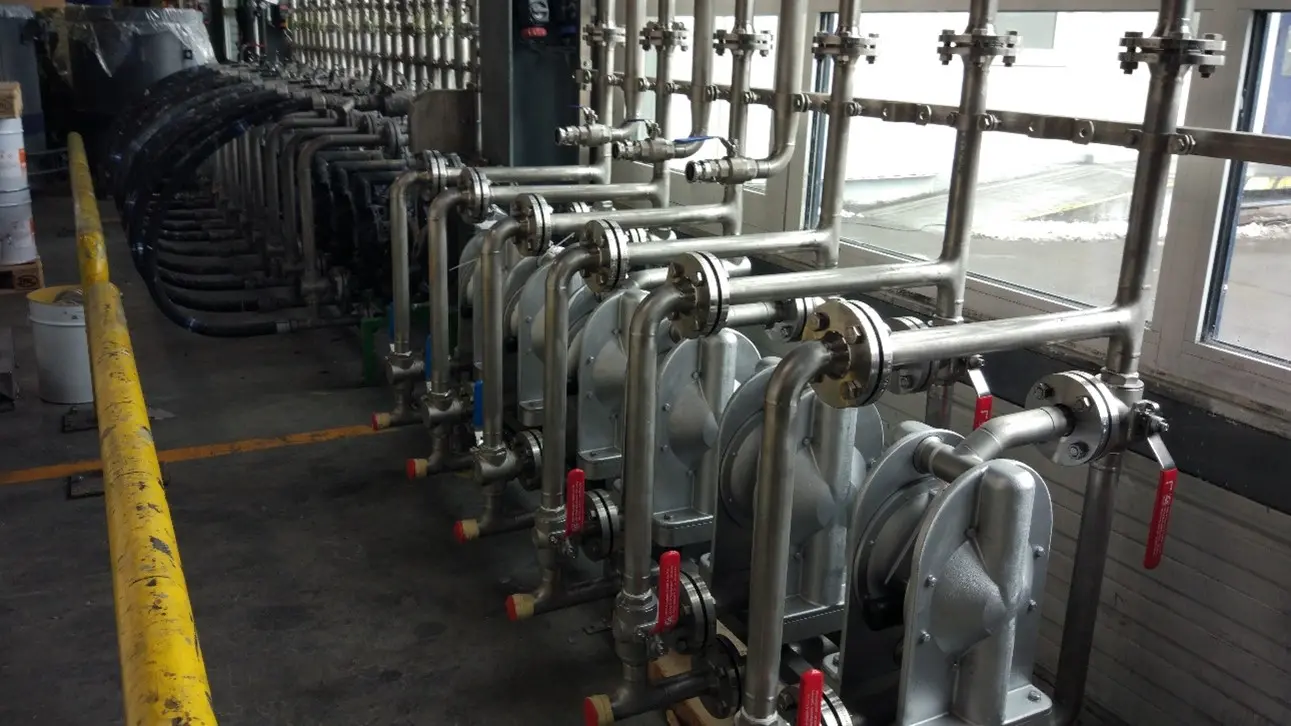
Tapflo diaphragm pumps constructed from aluminium or stainless steel are suited for transferring pigment pastes, waterborne dispersions, and solvent-based coatings. The combination of a metal pump body and chemically resistant diaphragm materials provides durability required to handle abrasive, high-solid, and solvent-containing paint formulations. Their simplified design reduces the number of moving parts, which lowers the risk of leaks and simplifies maintenance. These pumps are self-priming and capable of handling high-viscosity media and slurries, while tolerating intermittent dry running and variable backpressure, as commonly encountered in lines connecting mixers, storage tanks, and filter presses. The metal construction ensures dimensional stability under cyclic loads and when pumping abrasive pigment-laden coatings, maintaining consistent volumetric performance and extending service life of critical components.
Chemical-resistant diaphragms for paint production
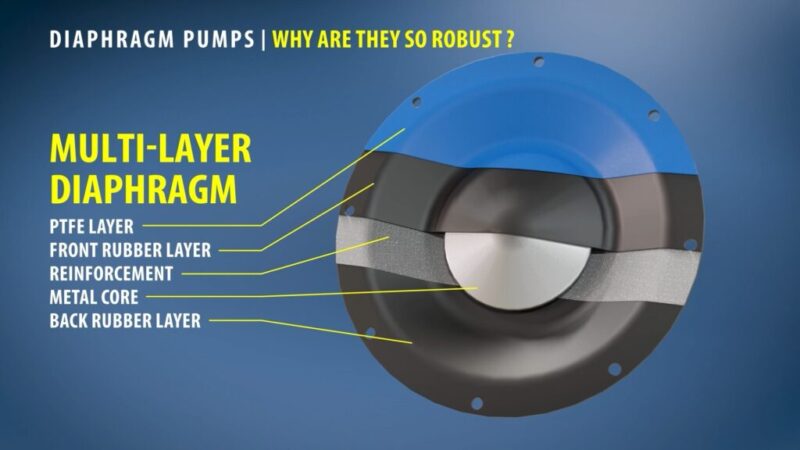
Tapflo diaphragms are composite constructions designed for heavy-duty applications, providing a uniform surface in contact with the medium. The homogeneous surface minimises leakage paths and reduces pigment or resin accumulation, improving cleanability. Diaphragms are available in various materials such as EPDM, NBR, FKM, PTFE, PTFE TFM™ 1705b, allowing selection based on the chemical composition and mechanical characteristics of the paint or coating. Material compatibility is critical to ensure long-term diaphragm integrity and prevent leakage under pulsating pressures. Our diaphragms can achieve over 80,000,000 cycles.
Key properties of PTFE diaphragms
The PTFE or PTFE TFM™ 1705b layer of the diaphragm creates a closed surface for the liquid. The integrated light metal support core and fabric reinforcement meet high strength requirements. Both materials provide a smooth, non-stick contact surface, ideal for paints, inks, pigments and adhesives.
PTFE TFM™ 1705b diaphragms exhibit increased mechanical strength, due to less deformation under load and better flex fatigue properties. Low porosity and reduced solvent permeability prevent contamination and swelling when handling ketone- or ester-based coatings, maintaining dimensional stability and consistent flow.
Advantages of PTFE coatings in paint production
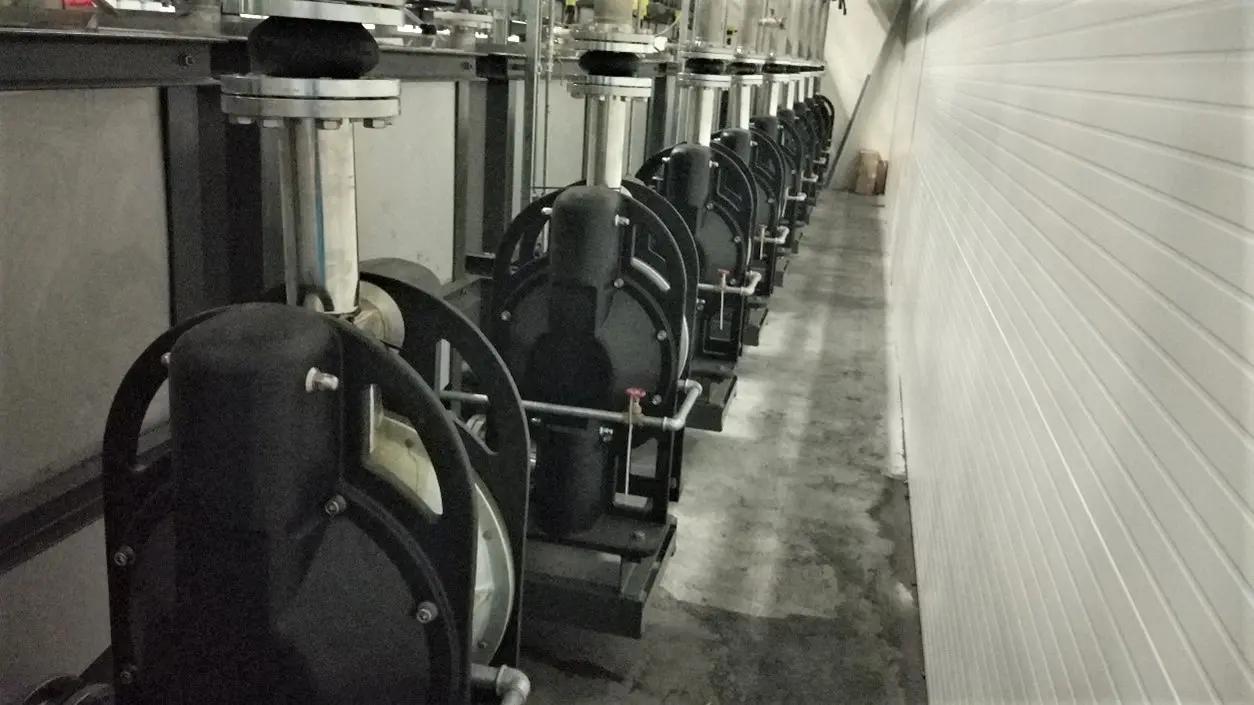
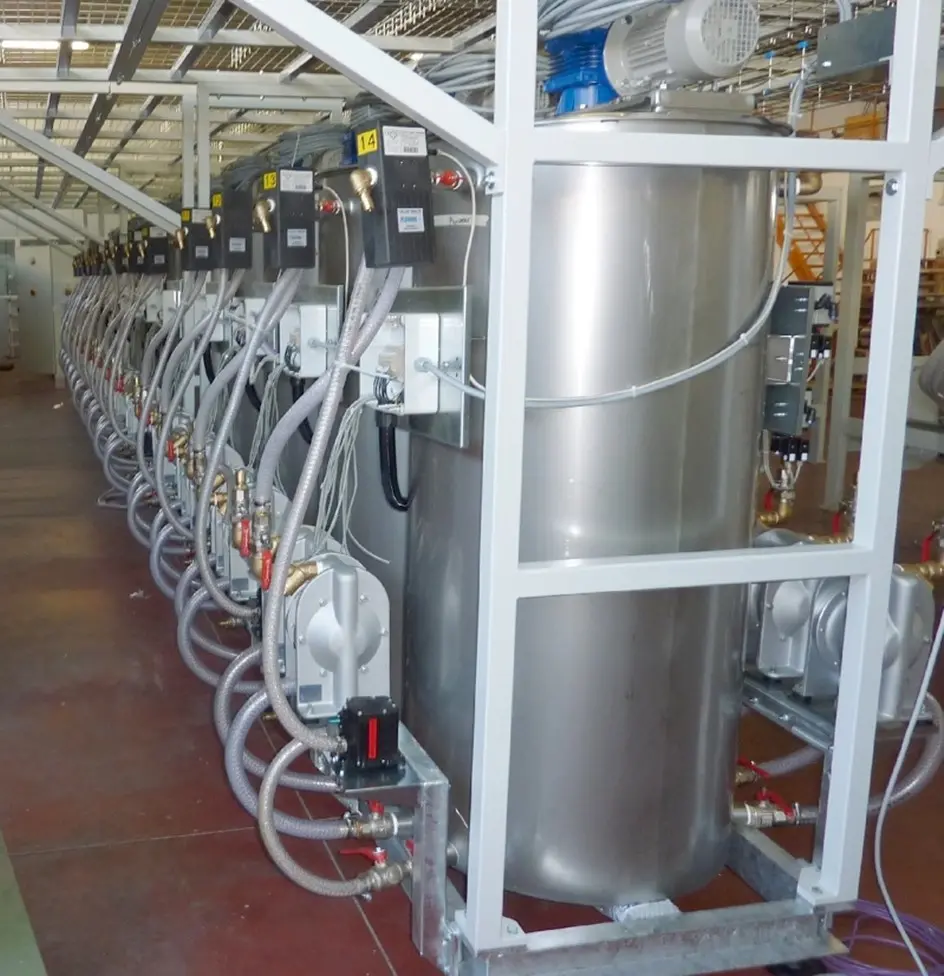
The optional PTFE coating applied to aluminium pumps provides a chemically resistant, non-stick surface specifically suited for handling paints, inks, and pigment dispersions. The PTFE coating is recommended to apply in the paint industry, as it provides the following benefits:
minimises adhesion of high-solid-content media to pump surfaces, reducing build-up and the risk of clogging enhances cleanability during product changeovers, including switching between solvent- and water-based paints or different colour batches protects the pump housing against aggressive solvents, ketones, esters, and aromatic compounds commonly used in coatings and inks maintains consistent flow and reduces mechanical wear when pumping abrasive pigments such as TiO₂ or iron oxides
Filter press pumps for paint industry
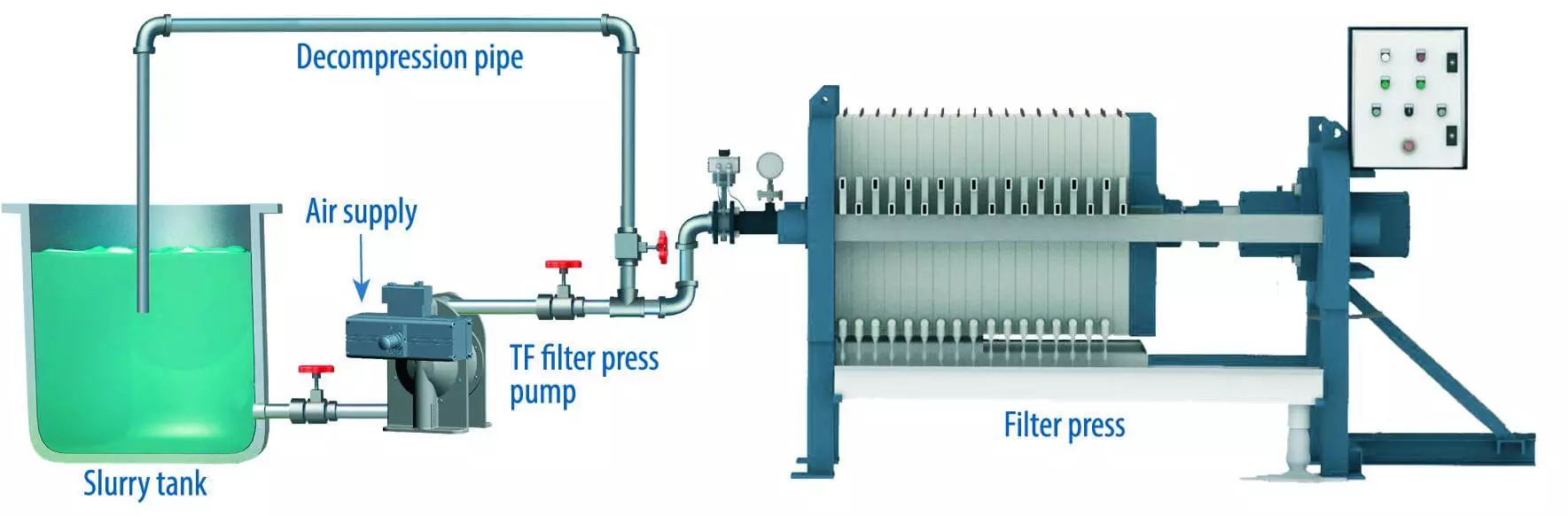
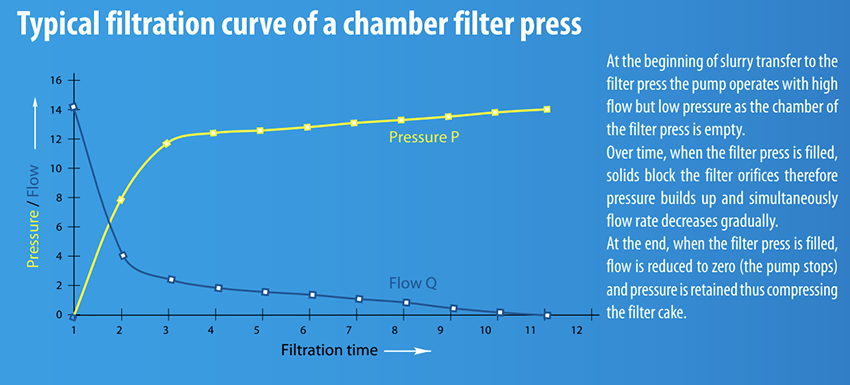
Tapflo pumps for filter presses are compact units that can be mounted directly on the filter press used for pigment slurries and paint formulations. The design allows direct pumping of high-solid-content media at pressures up to 16 bar.
In chamber filter press operation, the behaviour of air-operated diaphragm pumps aligns well with the changing hydraulic conditions during the cycle. As the filter cake builds up, system resistance increases and discharge pressure gradually rises. Under these conditions, the pump naturally reduces its stroke frequency, resulting in a proportional decrease in compressed air consumption.
Electrically driven pumps, in contrast, require higher energy input as pressure increases in order to maintain flow. Air-operated diaphragm pumps can also safely operate against a closed discharge line (dead-head condition) without risk of mechanical damage, which simplifies operation during filter press cycles.
The units are equipped with:
a reinforced pump housing to withstand mechanical stress from dense, abrasive media an external pressure booster increasing discharge pressure to maintain flow under rising system resistance a high-pressure air valve for reliable operation under fluctuating backpressure.
This configuration ensures stable pumping of abrasive and viscous media while maintaining operational reliability and reducing mechanical wear during filtration processes in paint production.