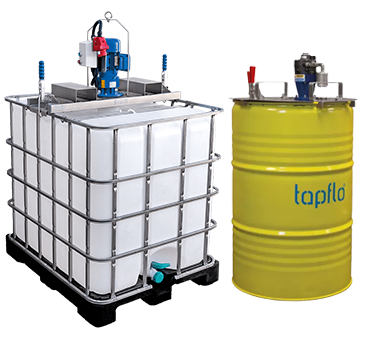
The client located in Austria is one of the leading producers in the field of galvanising and metal surface treatment. With extensive industry experience, the company continuously invests in advanced solutions to optimise chemical treatment and media recycling technologies to improve process efficiency and sustainability. The system supports reduction of chemical waste and lower operating costs through media recovery and reuse.
CLIENT’S PROBLEM AND CHALLENGES
The application forms part of a chemical regeneration and filtration system used in flux recycling within galvanising plants. The system is responsible for maintaining a stable composition of the flux bath, which is essential for ensuring consistent coating quality and reliable surface preparation of metal components prior to galvanising.
The client introduced a flux reprocessing and filtration system designed to recover and reuse the fluxing agent. This required reliable pumping solutions for two critical stages of the process:
 transfer of waste eluent from the flux baths to filter presses return of the regenerated flux back to the flux bath
Key challenges of the project:
highly aggressive wastewater streams
safe, leak-free and mechanical seal free pumping
large project scale (96 pumps)
variable process conditions across different stages of wastewater treatment
The pumped medium consisted of a highly aggressive chemical solution based on ammonium chloride and zinc chloride. The concentration was approximately 500 g/l, with a pH level in the range of 4 to 5. This combination of high salt concentration and mildly acidic conditions created a corrosive environment that placed significant demands on pump materials and sealing solutions.
TAPFLO ACTIVITIES
Tapflo conducted a technical analysis of the flux recycling system, focusing on the chemical properties of the medium, the operating parameters and the specific roles of each pump within the process loop. Based on the assessment, two complementary pump technologies were selected to safely handle each stage of the operation:
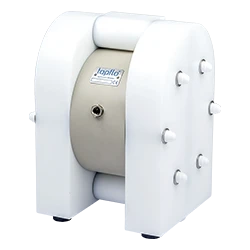
air-operated double diaphragm pumps manufactured from HDPE, vertical centrifugal pumps (CTV) manufactured from PP.
AODD pumps were used to transfer waste eluent from process baths to filter presses as they tolerate contaminated liquids with suspended solids and process residues. Their ability to automatically adjust to increasing backpressure typical of filter‑press cycles was also a decisive factor, since their performance is less sensitive to intermittent pressure spikes than many rotary alternatives.
APPLIED DEVICES:
 |
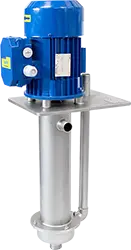 |
| air-operated diaphragm pump | vertical centrifugal pump |
The AODD pump is not equipped with conventional rotary shaft seals, reducing a common leakage path. HDPE construction was chosen for its chemical compatibility with the concentrated chloride solution used in this application. The pumps also tolerates intermittent duty and short periods of dry running during transitions such as line emptying or temporary loss of suction, which can occur in batch‑operated filtration stages.
In contrast, vertical centrifugal pumps were used to circulate the regenerated flux back to the process baths. Unlike the contaminated eluent, the filtered flux requires stable hydraulic performance, which centrifugal pumps provide through smooth, non-pulsating flow under steady operating conditions. The vertical cantilever design keeps the shaft sealing area outside the process liquid, reducing a major leakage path in chloride‑rich environments and simplifying maintenance. Polypropylene (PP) construction was selected for its proven chemical compatibility with ammonium and zinc chloride solutions used in this process.
RESULT
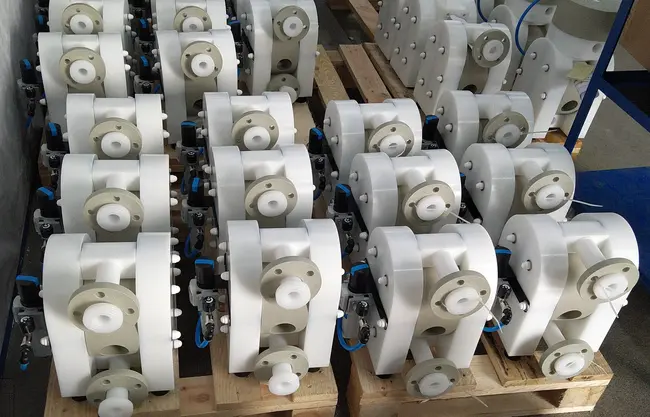
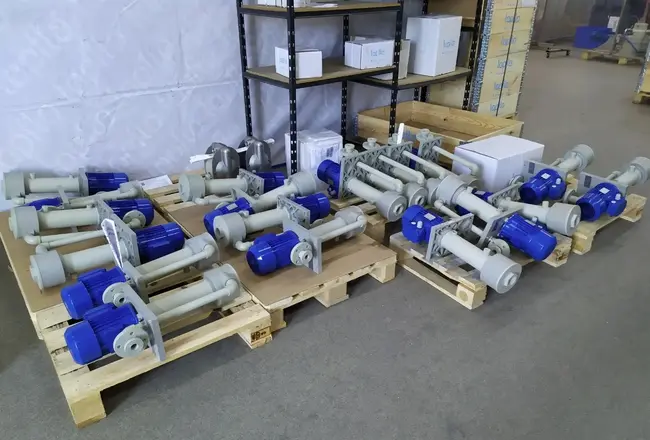
Each flux recycling system was equipped with a Tapflo T100 PEE-3DPY11SFR air-operated diaphragm pump and a CTV25-10P-5D-07 vertical centrifugal pump, forming a fully integrated solution for both contaminated and regenerated process streams. The project included a total of 110 pumps delivered into 3 phases throughout 2019 and 2020.
The separation of pump technologies for the dirty and clean sides of the process ensured that each stage operated under optimal conditions, resulting in consistent flow behaviour and stable process parameters throughout the regeneration cycle.
As a result, the system enabled effective regeneration of the fluxing agent, leading to reduced consumption of fresh chemicals while maintaining stable bath chemistry required for high-quality galvanising.
Looking for a pump for aggressive chemicals? Explore our product portfolio