
 Main centrifugal pump parts Designs of centrifugal pumps Performance curves NPSHa and NPSHr Self-priming abilities NPSHr vs self-priming ability Cavitation Centrifugal pumps material configurations Main applications of centrifugal pumps Key Parameters for proper centrifugal pump selection Centrifugal pumps – advantages and disadvantages Advantages of tapflo pumps over the competition Case Study: Industrial Pumps in Alcohol Production Tapflo centrifugal pumps – accessories Custom-built centrifugal pumps by Tapflo Certifications FAQs about centrifugal pumps
 |
Article author: Georgi Georgiev Strategic R&D projects leader |
Центробежные насосы (также известные как кинетические насосы, насосы с рабочим колесом, динамические насосы или роторно-динамические насосы) являются одними из наиболее часто используемых типов насосов в промышленных применениях. Так как же работает центробежный насос? Они работают, преобразуя механическую энергию приводного вала в кинетическую энергию посредством вращающегося рабочего колеса. Эта кинетическая энергия затем преобразуется в энергию давления внутри корпуса насоса, позволяя жидкости выталкиваться через выходное отверстие насоса.
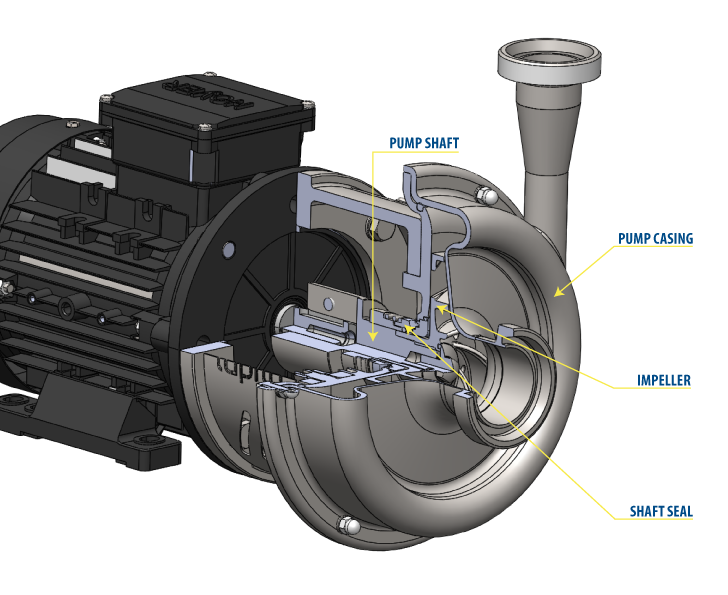
Основные части центробежного насоса
|
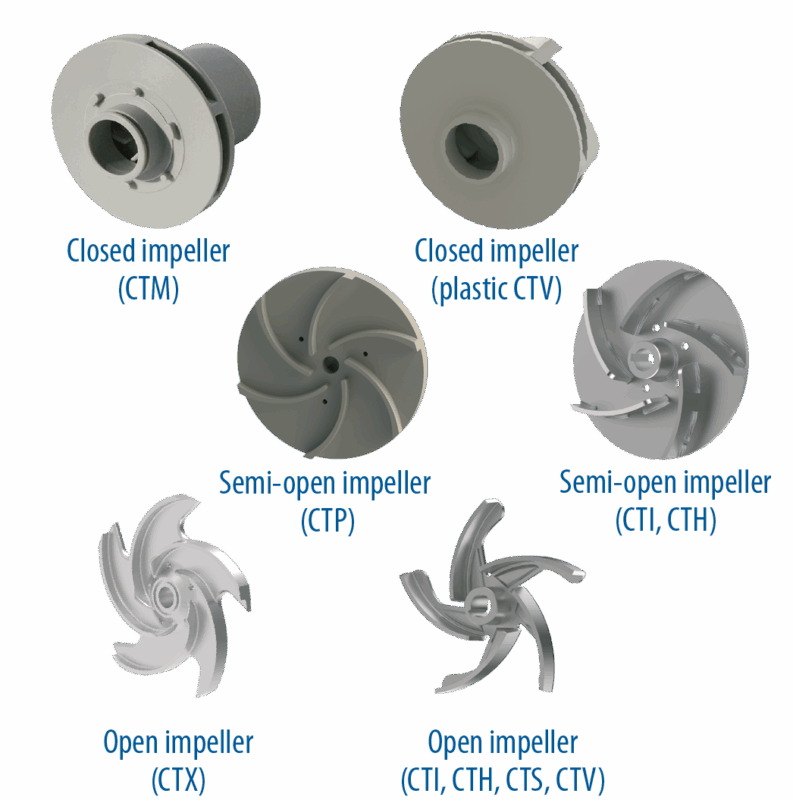
1. Impeller. The rotating component that imparts kinetic energy to the fluid. Closed impellers
Open impellers
Semi-open (or partially open) impellers
|
 |
|
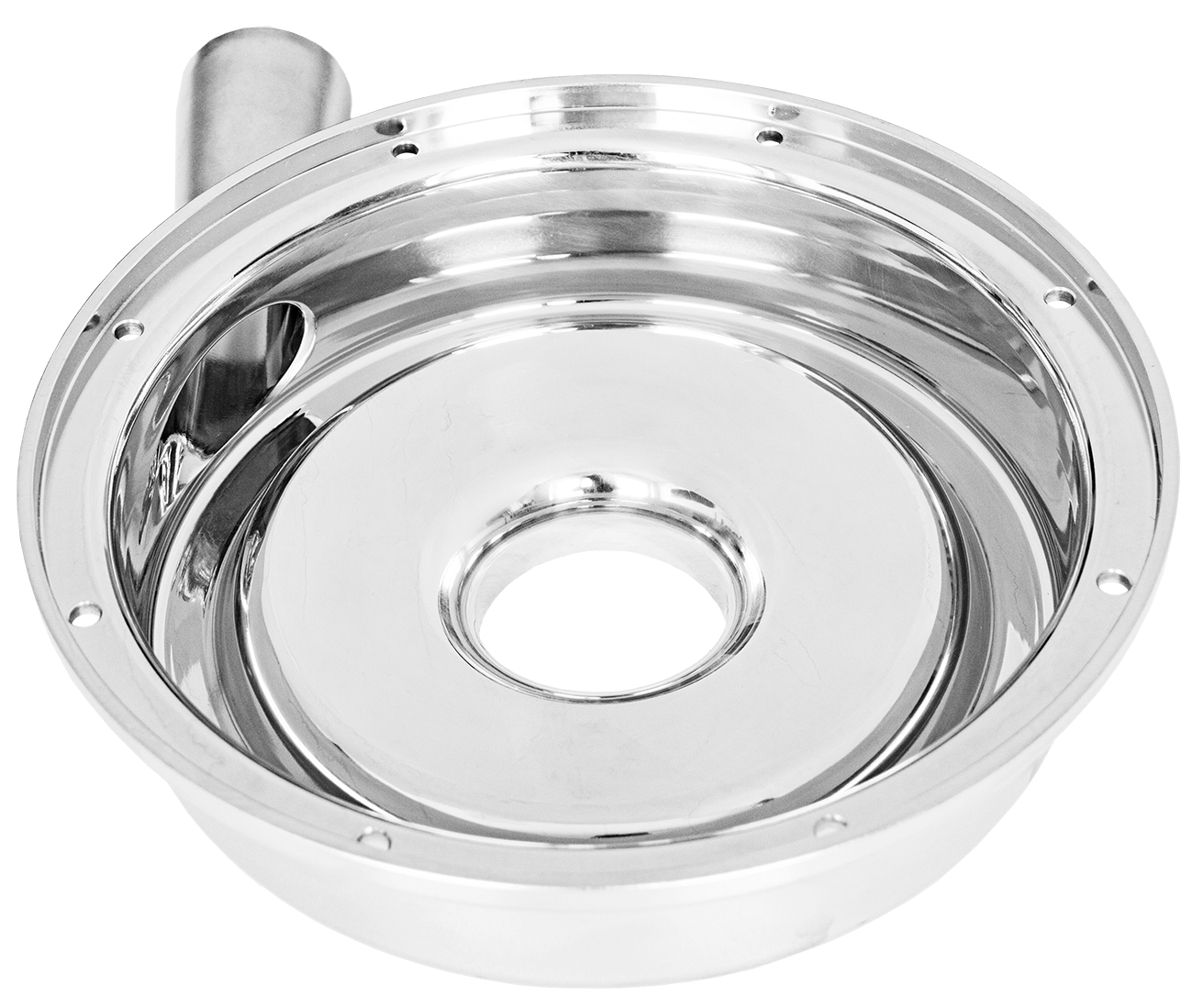
2. Centrifugal pump casing types:
|
 |
|
3. Pump shaft. Connects the impeller to the drive system (e.g., motor). |
|
|
4. Shaft seals:
|
|
|
5. Seal housing. Supports and encloses the shaft seal. |
|
|
6. Bearing support. Maintains shaft alignment and supports radial and axial loads, Monoblock (close-coupled) executions use the bearing supports of the drives (e.g., electrical motors) |
|
Are you interested in centrifugal pumps? Check out our offer
Конструкции центробежных насосов
Centrifugal pumps can be categorized based on various criteria, including:
Design type: hygienic, chemical, petrochemical, and others, depending on industry-specific requirements.
Number of stages: single-stage or multistage, which affects the pump’s pressure capabilities.
Flow type: radial flow, mixed flow, or axial flow, each suited to different head and flow rate conditions.
Shaft sealing method: such as mechanical seals or magnetic drive (mag drive), depending on leakage prevention needs.
Impeller design: including closed, semi-open (half-open), or open impellers, which influence efficiency and suitability for handling solids and air content.
Each design is developed for specific industrial applications and operating conditions, ensuring optimal performance, reliability, and compliance with process requirements.
Рабочие характеристики
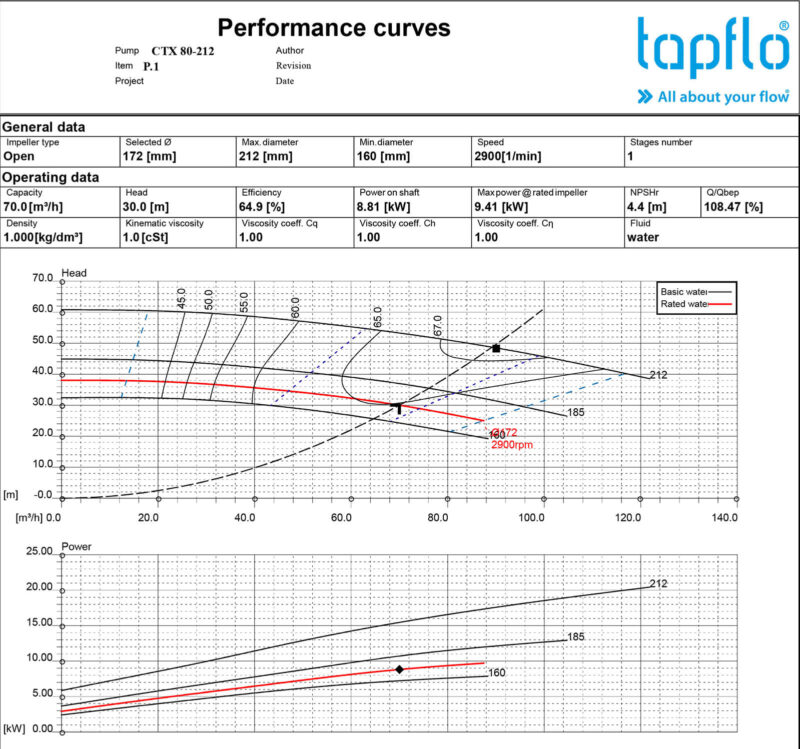
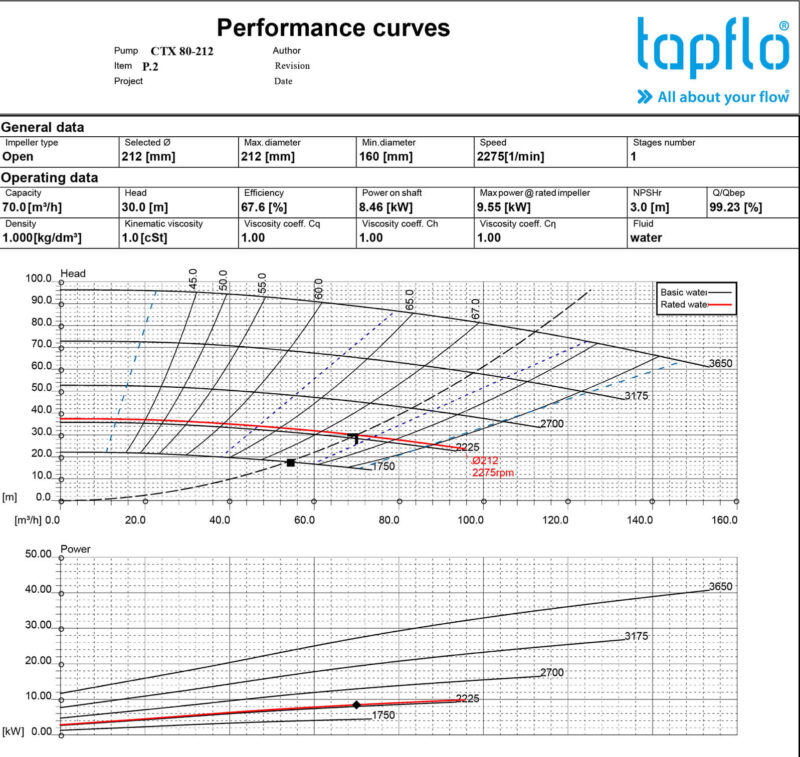
Рабочие (или характеристические) кривые центробежных насосов иллюстрируют зависимость между расходом (Q), напором (H), мощностью на валу (P), КПД (η) и требуемым кавитационным запасом (NPSHr), как правило, при постоянной скорости или в определенных диапазонах скоростей. Каждый типоразмер насоса в рамках данной серии охватывает определенный диапазон QH за счет подрезки рабочего колеса, что максимизирует общий охват QH всей серии. Однако, в связи с ростом затрат на энергию и тем фактом, что насосы обычно достигают максимального КПД при максимальном диаметре рабочего колеса, все более распространенным становится выбор центробежных насосов на основе кривых QHP в зависимости от различных скоростей (с помощью регулирования скорости, а не подрезки рабочего колеса).
| Рабочие характеристики серии Tapflo CTX для выбора по скорости |
Рабочие характеристики серии Tapflo CTX для выбора по диаметру рабочего колеса |
NPSHa and NPSHr
NPSHa (Net Positive Suction Head available) is the net pressure (or head) available at the pump inlet to prevent the liquid from vaporizing and causing cavitation. It is calculated based on the following factors:
The pressure in the suction tank can be vacuum, atmospheric, or pressurized, depending on the system design. The static suction head (positive if the liquid level is above the pump, negative if below). Minus the pressure losses in the suction pipeline and its components (e.g., filters, elbows, valves). Minus the vapor pressure of the liquid at the operating temperature.
In formula terms: NPSHa = (Htank + Hstatic — Hlosses) – Hvapor
Where:
Htank is the absolute pressure at the liquid surface in the suction tank, Hstatic is the static head (positive or negative), Hlosses includes frictional and local pressure losses in the suction pipeline, Hvapor is the vapor pressure of the liquid at the pumping temperature.
NPSHr (Net Positive Suction Head required) is the minimum net positive suction head needed at the pump inlet to prevent cavitation during operation. It is determined through standardized NPSH testing performed by the pump manufacturer for each specific pump model under controlled conditions.
NPSHa must always be higher than the NPSHr (Net Positive Suction Head required by the pump) to avoid cavitation and ensure reliable pump operation. A minimum safety margin of 0.5 meters is commonly recommended, though this value can vary depending on specific industrial standards or company requirements. This margin should also take into account potential liquid temperature increases inside the pump, which can raise the vapor pressure and reduce the effective NPSHa. Maintaining an adequate margin helps prevent cavitation, which can lead to damage of pump components, reduced efficiency, and operational downtime.
The NPSHr of centrifugal pumps can be reduced (i.e., improved) by using an inducer, which is a small axial-flow impeller installed at the pump inlet. The inducer increases the fluid pressure before it enters the main pump impeller, thereby enhancing the pump’s suction performance and reducing the risk of cavitation in low NPSHa conditions.
Self-priming abilities
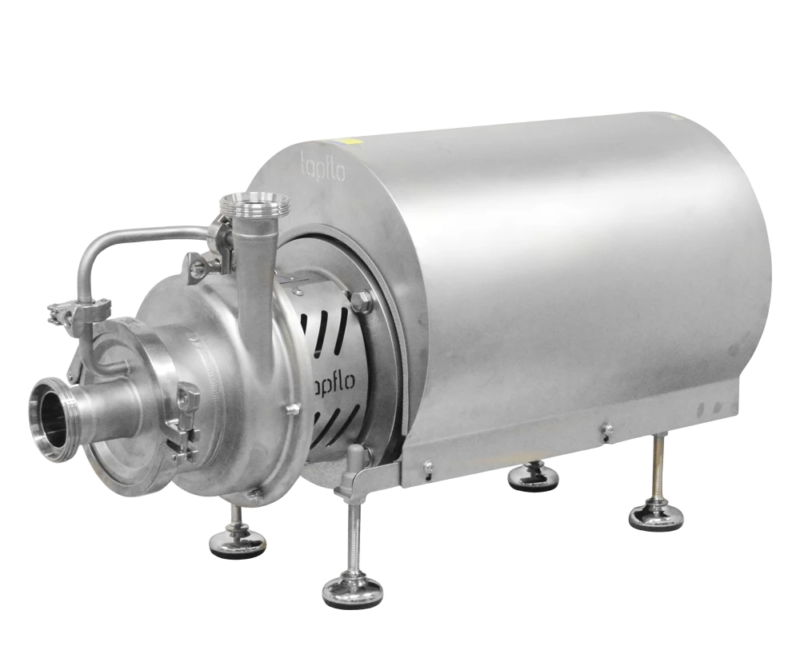
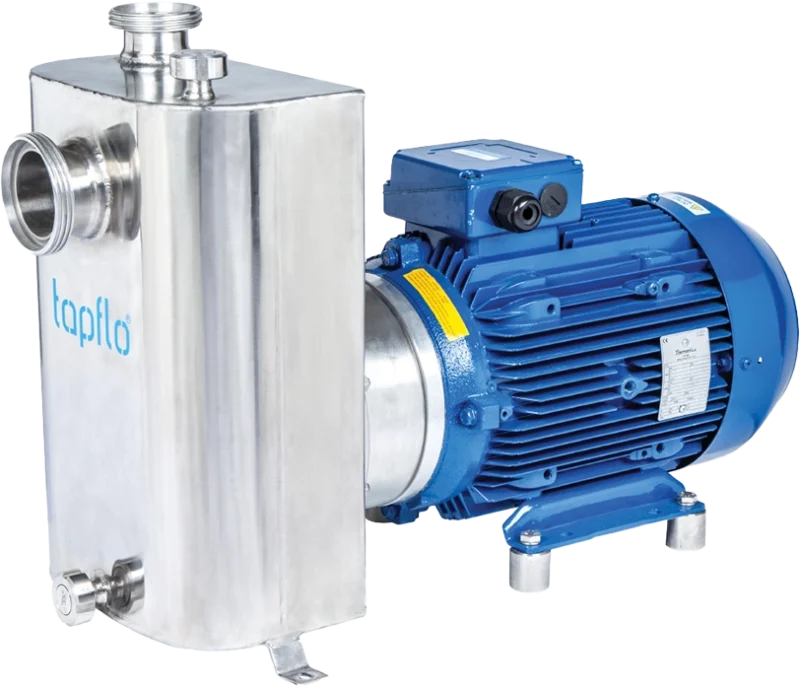
The self-priming ability of centrifugal pumps refers to their capability to evacuate air from the suction line and create a partial vacuum, allowing the liquid to be lifted and the suction pipeline to be primed in applications involving negative suction lift. This feature enables the pump to start pumping liquid without the need for manual filling of the suction pipeline.
| Tapflo self-priming series CTXS | Tapflo self-priming series CTS |
 |
 |
NPSHr против самовсасывающей способности
NPSHr и способность к самовсасыванию часто неправильно понимают и ошибочно связывают друг с другом. Многие специалисты отрасли ошибочно полагают, что способность насоса к самовсасыванию напрямую соответствует отрицательному напору на всасывании (или высоте всасывания), который он может преодолеть. На самом деле, это два разных понятия:
Self-priming ability refers only to the pump’s capability to evacuate air from the suction line and create vacuum to prime itself without manual intervention.
NPSHr (Net Positive Suction Head required), on the other hand, determines whether a pump can operate without cavitation at a given suction condition, and is the key parameter in evaluating how much negative suction lift a pump can handle.
Иронично, но самовсасывающие насосы часто требуют более высокого NPSHr, чем обычные центробежные насосы, что делает их менее подходящими для применений с высоким отрицательным всасыванием, несмотря на их способность к самовсасыванию.
Кавитация
Кавитация возникает, когда давление в напорном трубопроводе или внутри насоса падает до уровня или ниже давления пара перекачиваемой жидкости при рабочей температуре. Это приводит к испарению жидкости с образованием паровых пузырьков. Когда эти пузырьки перемещаются в области с давлением выше давления пара внутри насоса, они бурно схлопываются (имплодируют).
Имплозии генерируют высокоэнергетические микроструи за доли микросекунды, происходя более ста раз в секунду. Эти струи могут превышать скорость 50 м/с, а локальное давление достигать нескольких тысяч бар. Такие экстремальные условия могут привести к сильной эрозии компонентов насоса, увеличению шума и вибрации, снижению эффективности и даже к механическому отказу.
Конфигурации материалов центробежных насосов
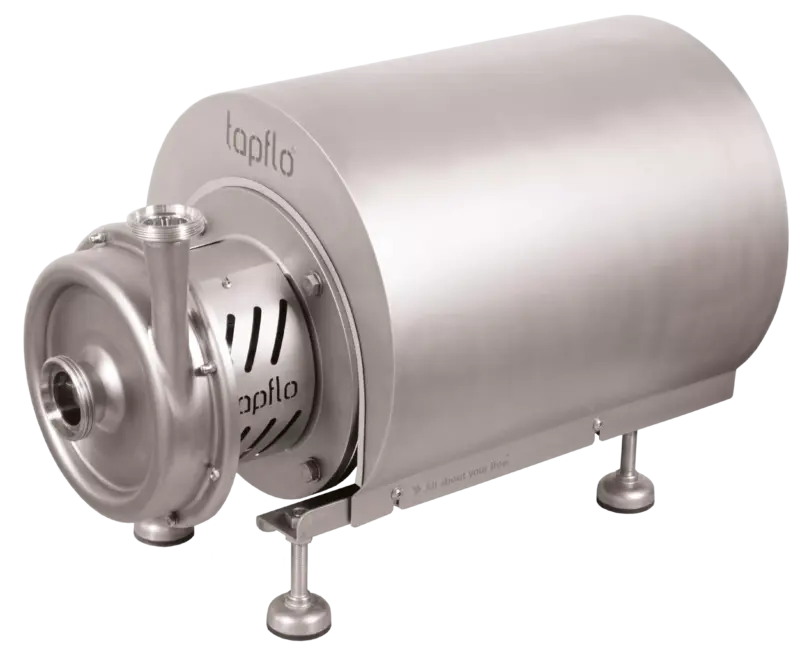
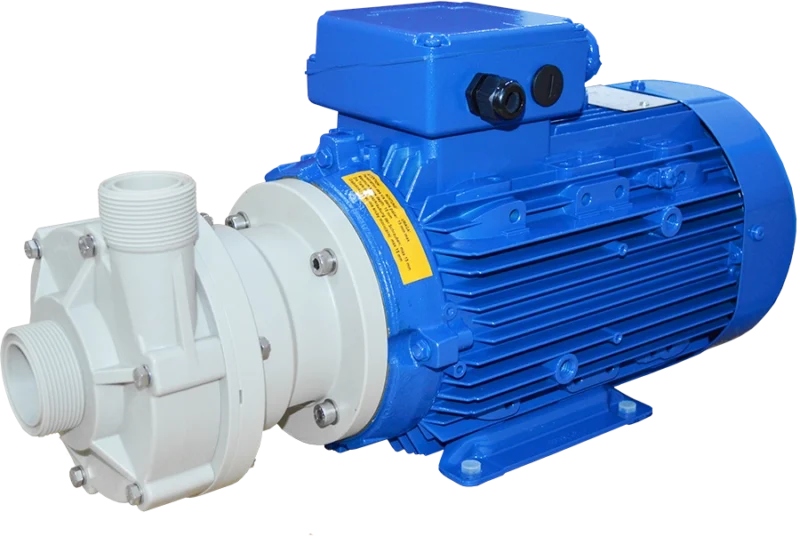
Выбор материала для промышленных центробежных насосов имеет решающее значение и должен быть адаптирован к конкретной перекачиваемой жидкости и требованиям отрасли, в которой используется насос. Понимание выбора материалов необходимо при анализе типичных применений центробежных насосов, поскольку насосы широко используются для транспортировки жидкостей с очень различными химическими и физическими свойствами:
- Агрессивные химикаты могут потребовать насосы, изготовленные полностью из пластиковых материалов (таких как полипропилен или ПВДФ), которые обеспечивают превосходную коррозионную стойкость там, где металлы в противном случае подверглись бы коррозии.
- В пищевой, питьевой и фармацевтической промышленности могут использоваться только материалы, сертифицированные для контакта с пищевыми продуктами, такие как нержавеющая сталь (обычно AISI 316L или 316Ti) и эластомеры, соответствующие требованиям FDA. Эти материалы также должны соответствовать стандартам гигиенического проектирования (например, EHEDG или 3-A).
- Материал уплотнительных колец механического уплотнения также имеет решающее значение. Уплотнительные кольца должны не только противостоять химическому воздействию перекачиваемой жидкости, но и быть совместимыми с гидродинамическими смазывающими свойствами этой жидкости. Распространенные комбинации включают углерод против карбида кремния или карбид кремния против карбида кремния, в зависимости от абразивности, температуры и вязкости применения.
| Tapflo CTX or CT in ss316L | Tapflo CTP or CTM |
 |
|
Main Applications of Centrifugal Pumps
|
|
|
|
|
|
Are you unsure which pump is right for you? Contact our experts!
Ключевые параметры для правильного выбора центробежного насоса
Точный выбор насоса зависит от нескольких критически важных параметров. Если какой-либо из них отсутствует или указан неверно, это может привести к плохой производительности, преждевременному выходу из строя или небезопасной работе.
|
Рабочая точка (точка эксплуатации):
|
Свойства перекачиваемой жидкости:
|
|
Условия системы:
|
Условия окружающей среды:
|
Неучет или неточное указание любого из этих факторов может привести к неправильному выбору насоса, что повлечет за собой неэффективность, кавитацию, отказ уплотнения или несоответствие требованиям безопасности или технологического процесса.
Центробежные насосы – Преимущества и недостатки
Advantages:
High efficiency for low-viscosity liquids:
Centrifugal pumps are highly efficient when pumping low-viscosity fluids such as water, alcohol, and light chemicals.
Ideal for high-capacity applications:
They are well-suited for applications requiring large flow rates at moderate to high heads.
Compact design:
Compared to rotary positive displacement and reciprocating pumps, centrifugal pumps typically have smaller overall dimensions and are easier to install and maintain.
Multistage capability:
Multistage centrifugal pumps are widely used for achieving very high heads (e.g., over 2000 meters) while still handling significant flow rates, making them ideal for high-pressure applications such as boiler feedwater, mine dewatering, and high building water supply.
Limitations:
Not efficient for high-viscosity fluids:
Efficiency drops significantly with increasing fluid viscosity
Limited effectiveness for low-flow or metering applications:
Centrifugal pumps are not ideal for very small capacities or where precise dosing/metering is required. In such cases, positive displacement pumps could be a better choice.
Преимущества насосов Tapflo перед конкурентами
Центробежные насосы Tapflo разработаны по принципу «прежде всего простота», что делает их легкими в установке, эксплуатации и обслуживании. Такой подход к проектированию ставит во главу угла функциональность, надежность и гигиеничность, исключая ненужную сложность.
Основатель и визионер Tapflo Group г-н Бёрйе Йоханссон часто подчеркивает, что «простота — это искусство» и что продукты Tapflo не должны быть сложнее, чем это необходимо для удовлетворения основных требований к механической прочности, гигиенической конструкции и эксплуатационной надежности.
This philosophy translates into several customer benefits:
Reduced maintenance time and costs
User-friendly operation
High reliability with fewer components prone to wear or failure
Easy cleaning and compliance with industry standards
Tapflo design concept ensures optimal performance across a wide range of applications while keeping ownership costs low.
Не пропустите – посмотрите другие видео Tapflo прямо сейчас и узнайте, как насосы Tapflo могут улучшить вашу работу.
Центробежные насосы Tapflo – Аксессуары
Центробежные насосы Tapflo могут быть оснащены широким спектром аксессуаров для удовлетворения разнообразных технологических требований и условий установки. Доступные варианты включают:
- Гигиенические кожухи. Обеспечивают защиту и чистоту, особенно в пищевой, пивобезалкогольной и фармацевтической промышленности.
- Регулируемые ножки. Облегчают точное выравнивание и установку по уровню во время монтажа.
- Кронштейны. Обеспечивают стабильное и надежное крепление к фундаментам или рамам.
- Встроенные частотные преобразователи (VFD). Обеспечивают точное управление скоростью насоса и расходом для повышения энергоэффективности и гибкости процесса.
- Индукторы. Улучшают всасывающие характеристики за счет снижения NPSHr, идеально подходят для применений с низким NPSHa.
- Системы охлаждающей и буферной жидкости. Обеспечивают надежную работу торцевых уплотнений в сложных или чувствительных применениях, защищая от сухого хода, загрязнения и утечек.
- Индивидуальные конструкции. Специальные конфигурации могут быть разработаны для удовлетворения конкретных требований заказчика или уникальных задач применения.
Custom-Built Centrifugal Pumps by Tapflo
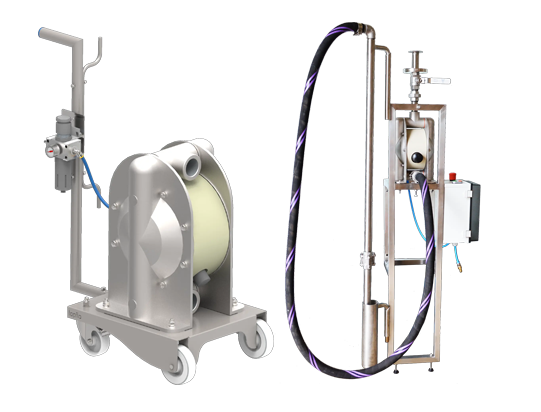
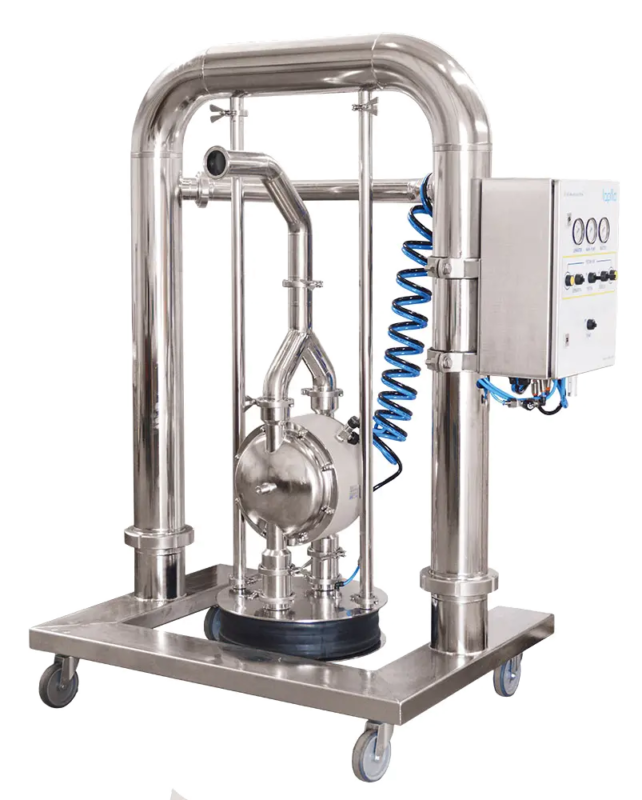
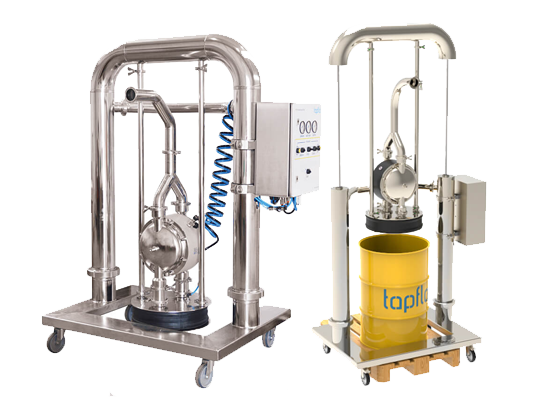
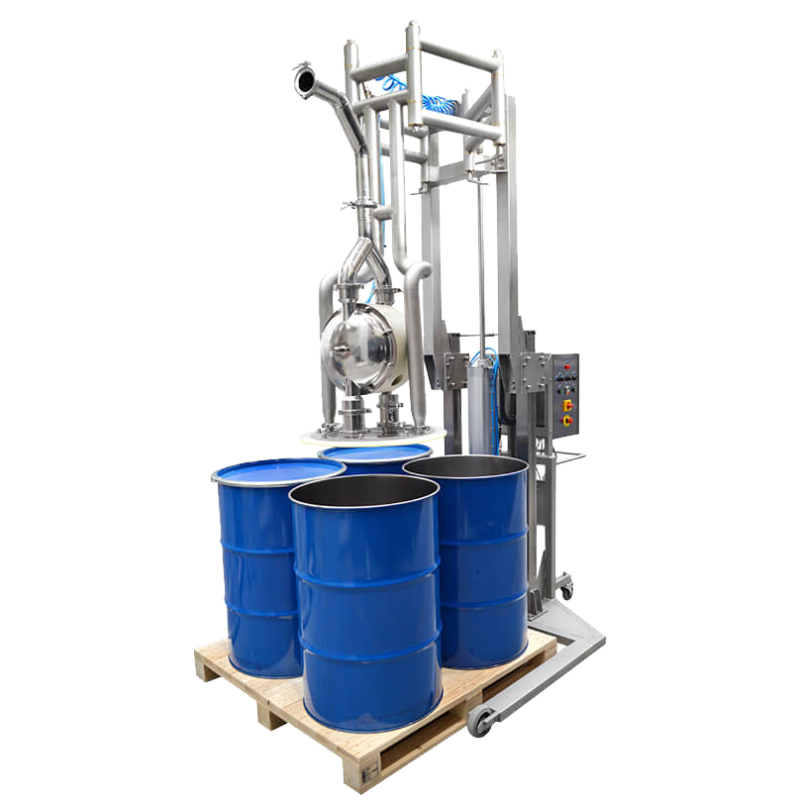
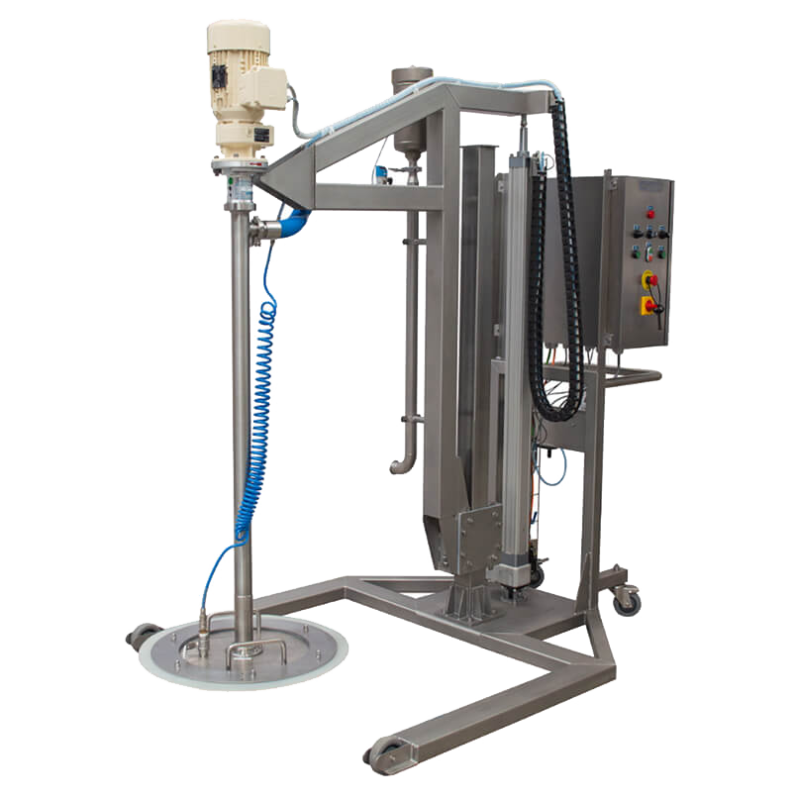
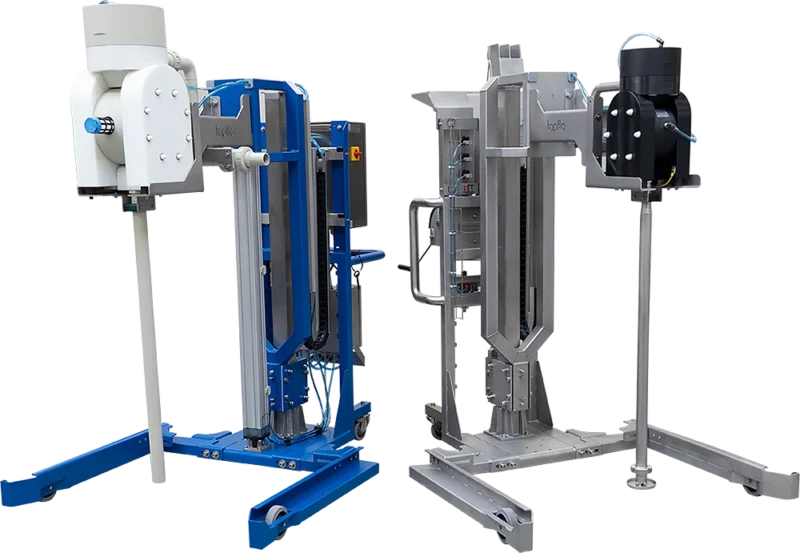
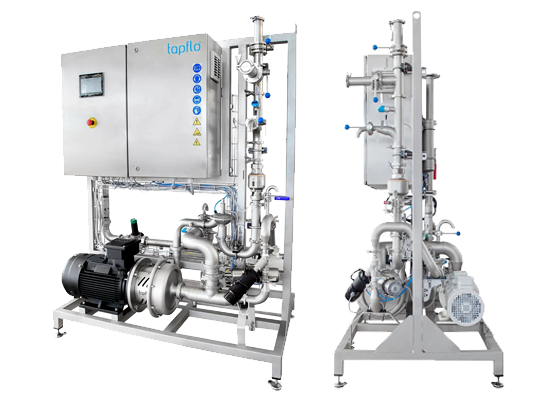
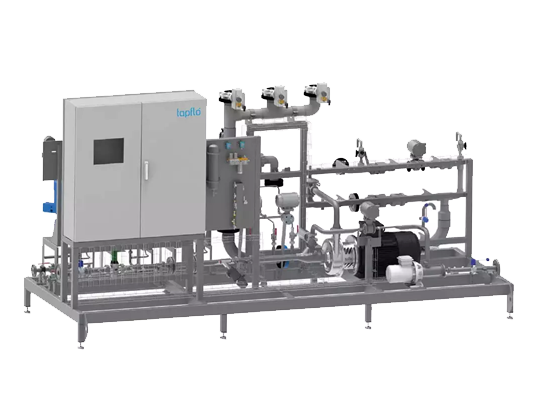
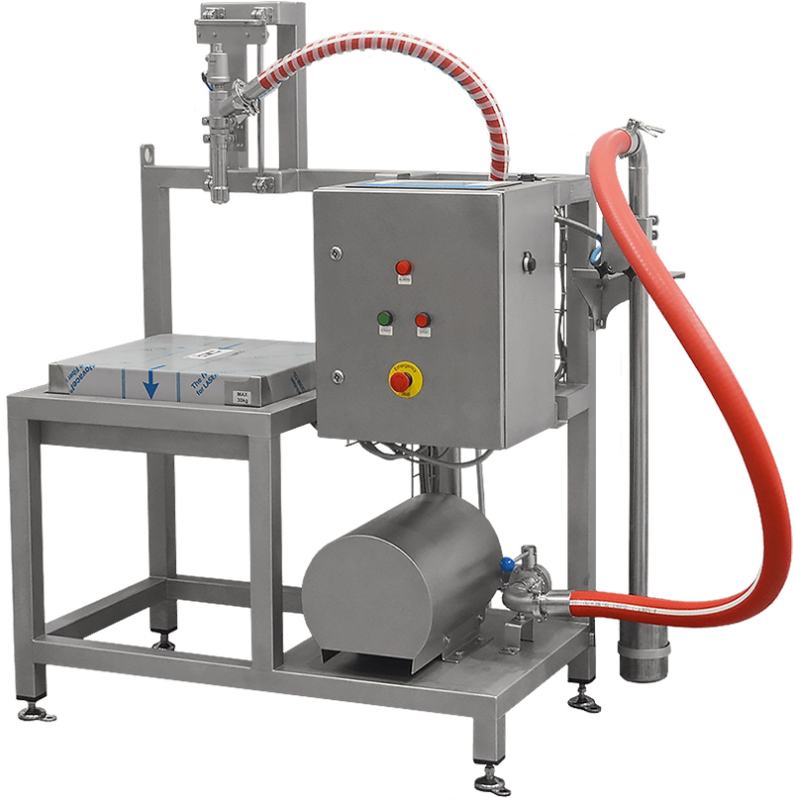
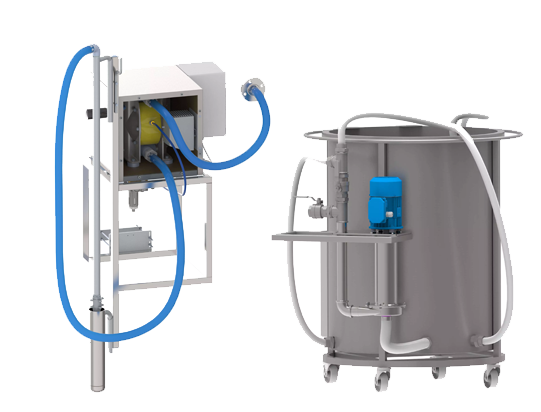
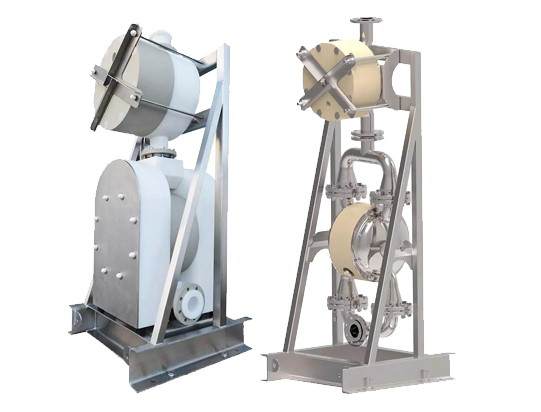
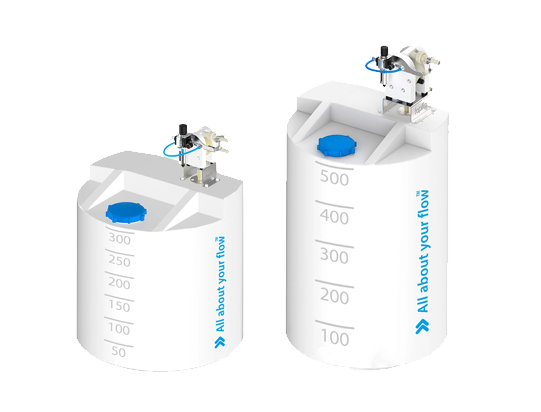
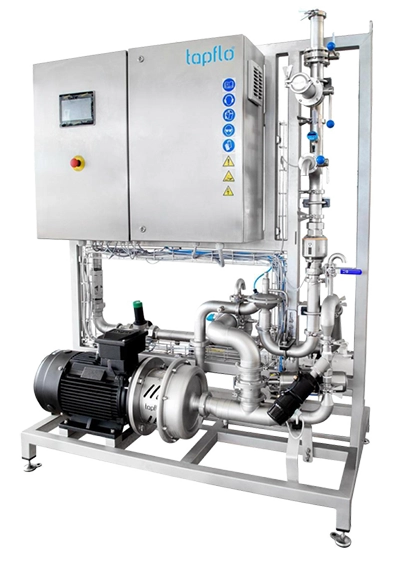
In addition to its standard industrial pump ranges, Tapflo Group offers custom-built centrifugal pump systems through its dedicated Tapflo Solutions department. This specialized division focuses on the design and delivery of complete turnkey units, tailored to meet specific customer requirements.
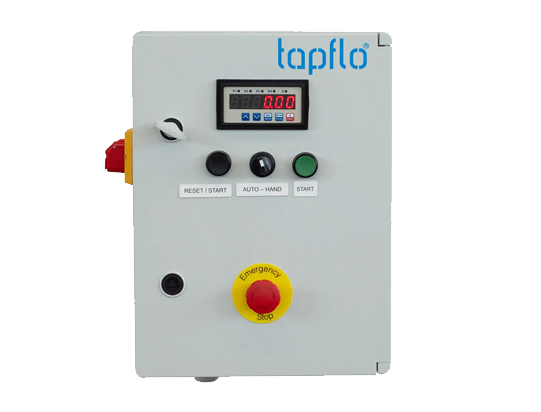
|
Tapflo custom systems can include:
These systems are developed according to customer specifications and process needs, providing fully integrated and ready-to-install solutions that reduce engineering time, ensure compatibility, and streamline commissioning. |
 |
Сертификаты
Гигиенические центробежные насосы Tapflo разработаны в соответствии со строгими санитарными стандартами 3-A и EHEDG, что обеспечивает их пригодность для использования в пищевой, пивобезалкогольной и фармацевтической промышленности.
Кроме того, многие модели насосов Tapflo сертифицированы ATEX, что делает их пригодными для работы во взрывоопасных средах в соответствии с Директивой ATEX 2014/34/EU.
Эти сертификаты подтверждают приверженность Tapflo безопасности, гигиене и соблюдению нормативных требований в широком спектре промышленных секторов.
FAQs about centrifugal pumps
|
What to Consider When Purchasing a Centrifugal Pump The selection of a centrifugal pump should be based strictly on accurate and complete application and industry-specific data. It is essential that the selection be reviewed and confirmed by experts from the pump manufacturer, especially when the pump plays a critical role in your production process. Choosing a centrifugal pump suitable for the specific fluid properties, operating conditions, and the overall piping system design ensures long-term efficiency and reliability. For reliable and correct pump selection, it is important to share operational experience with existing pumps used in similar applications. Many pump issues arise not because the pump was selected incorrectly, but because the application data provided during the selection process was inaccurate or incomplete. In many cases, pumps that function well today had to be upgraded or modified during commissioning or long-term use. Unfortunately, the original application data on which the initial selection was based is often not updated to reflect these changes. This creates a knowledge gap that can lead to recurring issues in future pump selections. It is important to remember that one of the most valuable assets for a pump end user is the accumulated experience with existing equipment. Leveraging this knowledge and maintaining up-to-date records of changes, performance, and operating conditions — including adjustments made to the piping system — is key to making informed and effective pump purchasing decisions. |
|
How to Properly Operate Centrifugal Pumps and Improve Their Efficiency For reliable operation, every centrifugal pump should run at or near the duty point or range for which it was selected. To achieve this, operators must monitor and control the suction and discharge conditions, as well as ensure the pump itself is in proper working condition. Besides having well-trained operators, one of the most critical factors for correct pump operation is the use of proper monitoring and control equipment. An industrial pump without pressure monitoring at both the suction and discharge sides is like a car without a dashboard. Some drivers may believe they can “feel” the speed or engine temperature, but this is widely regarded as poor practice. A similar mistake is often made by industrial pump users who rely on intuition rather than data. Likewise, operating a centrifugal pump without the ability to adjust discharge pressure is like driving a car without a steering wheel. It might work on a straight path, but the moment conditions change, control is lost. In real-world applications, suction and discharge conditions often fluctuate, so static operation is rarely efficient or sustainable. To maintain optimal performance and improve efficiency under variable conditions, it is advisable to implement intelligent manual or automated control of pump speed and/or discharge pressure. Variable frequency drives (VFDs) and automation systems are becoming increasingly affordable, especially as energy costs continue to rise. As a result, such systems are quickly becoming the industry standard, and companies should begin preparing for their widespread adoption. |
|
How Do Centrifugal Pumps Handle Abrasive Fluids? Centrifugal pumps designed to handle abrasive fluid (commonly known as slurry pumps) are specifically engineered to pump liquids containing high concentrations of solid particles, often up to 60% by volume. These pumps are built with robust features to withstand the wear caused by abrasive materials. Key design considerations include:
Overall, successful pumping of abrasive fluids requires not only the right pump design but also proper seal management, material selection, and flushing arrangements. |
|
How Do Centrifugal Pumps Handle High-Viscosity Fluids? In theory, there is no upper viscosity limit for fluids that centrifugal pumps can handle. A common industry joke says, “If a centrifugal pump can’t handle a fluid due to its high viscosity, a bigger centrifugal pump can.” While humorous, this reflects a truth: with appropriate scaling and design, centrifugal pumps can indeed be used for high-viscosity applications. For example, large centrifugal pumps are successfully used to transport crude oil with viscosities up to 5,000 cP. In such cases, centrifugal pumps are often preferred over positive displacement (volumetric) pumps because they offer:
Although positive displacement pumps typically provide higher efficiency with viscous fluids, their significantly larger size and cost for high-flow applications make them less attractive in some industries. However, it’s important to note that centrifugal pumps are typically designed for a maximum viscosity range depending on their intended application. For pumps used in industries such as food, pharmaceuticals, and chemicals, this range usually falls between 150 cSt and 500 cSt. Within this range, centrifugal pumps, especially with low head, can still operate more efficiently and competitively. |
|
Are Centrifugal Pumps Self-Priming? Most standard centrifugal pumps are not self-priming. They require the pump casing and suction line to be filled with liquid before startup. If operated dry or with air in the system, they will fail to generate suction and can be damaged. However, there are special centrifugal pump designs that are self-priming. These pumps are capable of evacuating air from the suction line and create vacuum to lift fluid from a level below the pump without external priming assistance. Despite this convenience, self-priming centrifugal pumps are generally less efficient than standard designs due to their more complex internal geometry. Additionally, self-priming models typically have a higher Net Positive Suction Head required (NPSHr), which limits their ability to handle significant suction lift (negative suction head). Because of these limitations, standard non-self-priming centrifugal pumps are often preferred for applications involving:
In such cases, a separate priming system is used to fill the suction pipeline and pump casing before startup. These systems operate only during priming and are then stopped and isolated. Common priming solutions include:
This approach combines the efficiency and performance of standard centrifugal pumps with self-priming abilities. |
|
The Most Common Problems Resulting from Improper Use of Centrifugal Pumps and How to Avoid Them? Improper selection, installation, or operation of centrifugal pumps can lead to numerous performance and reliability issues. Below are some of the most frequent problems, their causes, and how to avoid them: Common Problems:
How to Avoid These Issues:
By implementing these best practices and investing in proper training and system instrumentation, many of the most common centrifugal pump problems can be prevented resulting in longer service life, higher reliability, and lower operating costs. |
| More information about Tapflo centrifugal pumps: worldpumps.com |