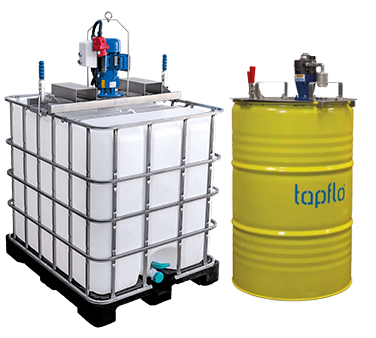
 The Changing Landscape of the Chemical Industry What is Critical When Selecting a Chemical Pump? Why Chemical Diaphragm Pumps? Aggressive Media and Process Reagents as a Challenge for Chemical Installations Applications of Diaphragm Pumps in Demanding Chemical Installations Reliability and Ease of Operation in Demanding Chemical Applications
|
|
Article author: |

The chemical industry is currently one of the most demanding industrial sectors. Increasing environmental regulations, growing pressure to ensure employee safety, and the need for uninterrupted process continuity mean that selecting the right industrial pump has become a strategic decision rather than a purely technical one. Pumps are a critical element of this complex equation. For this reason, it is advisable to rely on experienced specialists who take into account not only all technical parameters but also propose application-specific and non-standard solutions.
The Changing Landscape of the Chemical Industry
Globally, the chemical sector is undergoing a significant transformation. In Europe in particular, increasingly stringent environmental regulations can be observed, including discussions surrounding restrictions on PFAS compounds (persistent fluorinated compounds), which are widely used in materials offering high chemical resistance. At the same time, chemical plants worldwide are investing in automation, reducing manual handling, and improving the overall safety of process installations.
In this context, auxiliary equipment such as chemical resistant pumps must meet far more than basic performance requirements.
What Is Critical When Selecting a Chemical Pump?
The primary consideration is material compatibility – the industrial chemical pump must be resistant to corrosive, toxic, or chemically reactive liquids. Equally important factors include:
 leak prevention and minimisation of leakage risk,
safe operation and servicing,
resistance to dry running and variable process conditions,
compliance with applicable standards and certifications (ATEX, REACH, FDA – depending on the application).

In many chemical plants, the ability to operate safely in potentially explosive atmospheres is also essential. Pneumatically operated diaphragm pumps, such as Tapflo TB series pumps, provide safe operation in ATEX zones thanks to appropriate certification verified through testing by notified bodies. AODD pumps, powered by compressed air, offer inherent safety by operating without an electric drive.
Why Chemical Diaphragm Pumps?
Diaphragm pumps are widely regarded as one of the safest pumping solutions for the chemical industry. Their no-mechanical seal design significantly reduces the risk of leakage and operator contact with aggressive media. In practice, this results in:
a lower risk of chemical burns to production personnel,
reduced need for additional safety systems,
easier diagnostics and repair in the event of discharge blockage,
the ability to stall the pump without damage when the discharge valve is closed.
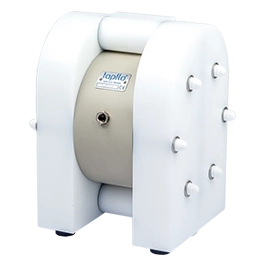
In addition, Tapflo diaphragm pumps perform exceptionally well with media of varying viscosity containing solids or sediments, which is typical for many chemical processes. They are also resistant to elevated temperatures and, depending on the material execution, can operate at temperatures of up to 100°C. Their design, based on flexible diaphragms and pneumatic drive, ensures stable performance even under dynamically changing process parameters and predictable operation across a wide range of conditions. Properly selected chemical diaphragm pumps are commonly used for pumping concentrated acids and alkalis, media used in galvanic processes, CIP chemicals, and aggressive process reagents.
Aggressive Media and Process Reagents as a Challenge for Chemical Installations
In the chemical industry, the term aggressive media refers to liquids and mixtures that, due to their chemical, corrosive, or reactive properties, place significant stress on process equipment. This group primarily includes concentrated inorganic acids, such as:
nitric acid (HNO₃),
sulphuric acid (H₂SO₄),
hydrochloric acid (HCl),
phosphoric acid (H₃PO₄),
as well as strong alkalis, including sodium hydroxide (NaOH) and potassium hydroxide (KOH), which are widely used in chemical synthesis, surface treatment, and cleaning or neutralisation processes. The aggressiveness of a medium is determined by a combination of factors such as pH, the presence of oxidising agents or solvents, elevated temperature, and variable concentrations during the technological process.
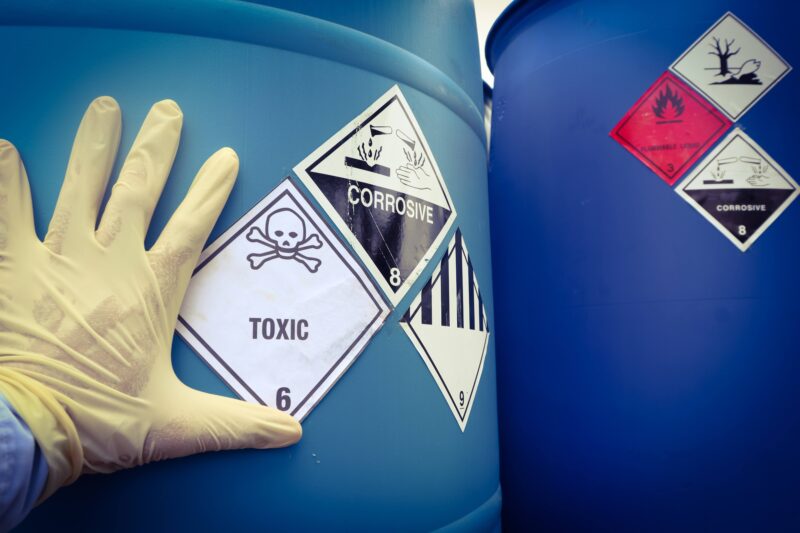
In this context, the term aggressive process reagents is used to describe chemicals employed at specific stages of production to initiate, sustain, or support chemical reactions. Although they do not always form part of the final product, they often remain in prolonged contact with the process installation. Their cyclic or continuous use places high demands on equipment, particularly in terms of material resistance, thermal stability, and long‑term repeatability of operating parameters. This is especially critical in applications where the composition and physicochemical properties of the process medium change dynamically.
In chemical applications, the selection of materials in direct contact with the medium is therefore of key importance. PTFE pump housings, combined with PTFE, EPDM or FKM diaphragms, provide very high chemical resistance and safe operation with aggressive media at elevated temperatures. Pumps configured in this way perform reliably in demanding process installations where operational reliability and material compatibility are critical.
Applications of Diaphragm Pumps in Demanding Chemical Installations
In chemical plants worldwide, Tapflo diaphragm pumps have become a permanent component of installations related to battery recycling, chemical processing and metal surface treatment. At a battery materials production facility, several dozen T800 and T400 diaphragm pumps in PEP execution are used to transfer dense mixtures to filter presses, where liquid–solid separation takes place. In battery recycling installations, various Tapflo diaphragm pump series, including T400, T200 and T100 models in different material configurations – support successive process stages, from handling acids and alkalis, through pumping process slurries, to transferring purified solutions. In metal surface treatment applications, Tapflo AODD pumps, complemented by CTV centrifugal pumps, support chemical bath regeneration processes, where spent solutions are filtered and returned to the process. Across all these applications, the decisive factors are resistance to aggressive media, safe leak‑free operation, and the ability to perform fast servicing without prolonged production downtime.
Reliability and Ease of Operation in Demanding Chemical Applications
In the daily operation of chemical installations, equipment reliability, ease of handling and safe operation are of paramount importance. Tapflo diaphragm pumps consist of a relatively low number of components, which significantly simplifies servicing. For maintenance engineers, this translates into solutions that are not only resistant to aggressive media but also do not require complex maintenance procedures and help minimise downtime. Thanks to their simple operating principle, seal‑less design and ability to run dry, diaphragm pumps meet these requirements effectively, offering a high level of safety and predictable behaviour even under variable process conditions.
Selecting the right pump for the chemical industry should therefore take into account not only the characteristics of the pumped medium but also practical operational factors such as service availability, response time and ease of maintenance. Cooperation with an experienced industrial pump manufacturer such as Tapflo enables the selection of solutions that simplify daily technical operations, increase installation safety and ensure stable performance even in applications involving aggressive media and process reagents.
Looking for a pump for aggressive chemicals? Check out our product portfolio