What are diaphragm pumps?
Diaphragm pumps – types
How does an air-operated diaphragm pump work?
Diaphragm pumps – construction and principle of operation
Diaphragms, air distribution valves, check valves
Diaphragm pumps – installation types, most important rules
How to properly operate diaphragm pumps?
Device selection in five steps
What are the benefits of using diaphragm pumps?
Diaphragm pumps – challenges and problems
Accessories for diaphragm pumps
What determines the price of diaphragm pumps?
Diaphragm pumps – Tapflo vs. other manufacturers
 |
Article author: Leszek Świerszcz Marketing and PR specialist |
Are you looking for a special purpose pump that will take your business to the next level? A diaphragm pump is one of the most versatile pumps on the market. This versatility means that diaphragm pumps are used in many industries and are very popular. We can find them, among others, in the chemical, food, construction, and pharmaceutical industries, as well as in wastewater treatment plants. Customers appreciate them for their reliability, durability, and various installation options. Thanks to a diaphragm pump, you will optimize your production processes and efficiently transport even the most demanding liquids. Are you wondering how a diaphragm pump works? How is it built and what types do we divide it into? Or maybe how is its operation? You will learn more from our compendium.
What are diaphragm pumps?
A diaphragm pump is an economical and easy-to-install device for pumping various inorganic or biological media. It allows the movement of working fluids using a pneumatic drive. The design and operating principles of a diaphragm pump are uncomplicated. The key element here is the diaphragm, usually driven by compressed air, which moves due to its force. This process causes a change in the volume of the working chamber, and automatically opening suction and discharge valves enable the pumping of liquid.
Diaphragm pumps – types
There are two basic types of diaphragm pump designs:
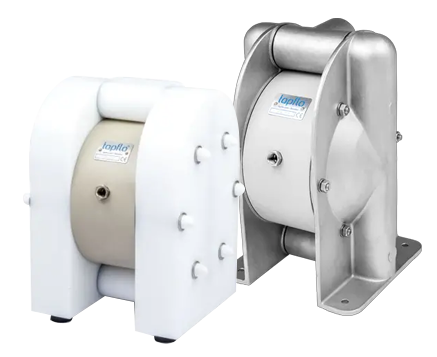 |
AODD (Air-Operated Double Diaphragm) pumps – work by displacing fluid using diaphragms driven by compressed air, which is distributed by a manifold. Also known as a pneumatic pump. This type of drive is referred to as pneumatic. The manifold is responsible for redirecting the air and setting the diaphragm assembly in motion. An important element is also the balls, which act as check valves, helping to pump the liquid. Pneumatic diaphragm pumps can be regulated in terms of efficiency using a needle valve on the air supply. | ||
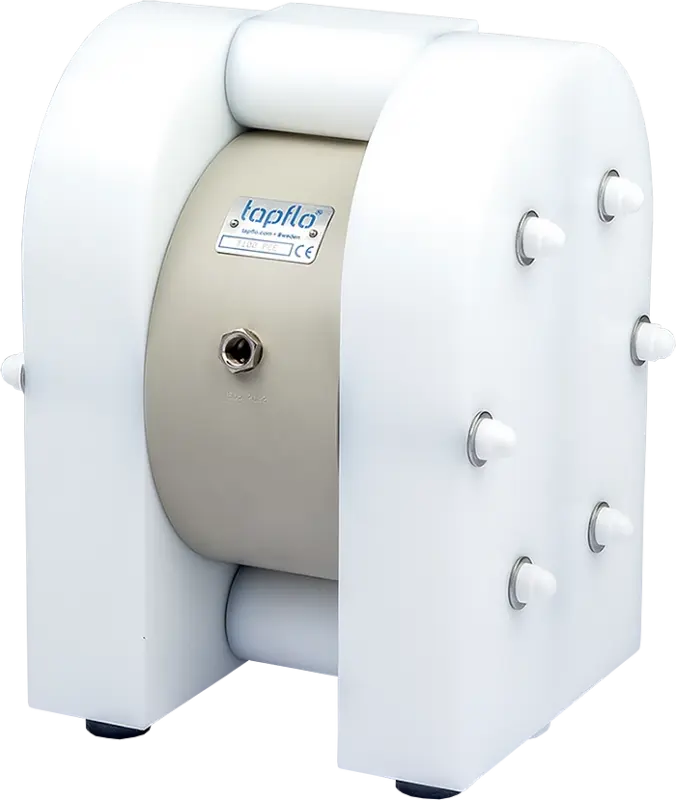 Plastic diaphragm pumps Plastic diaphragm pumps |
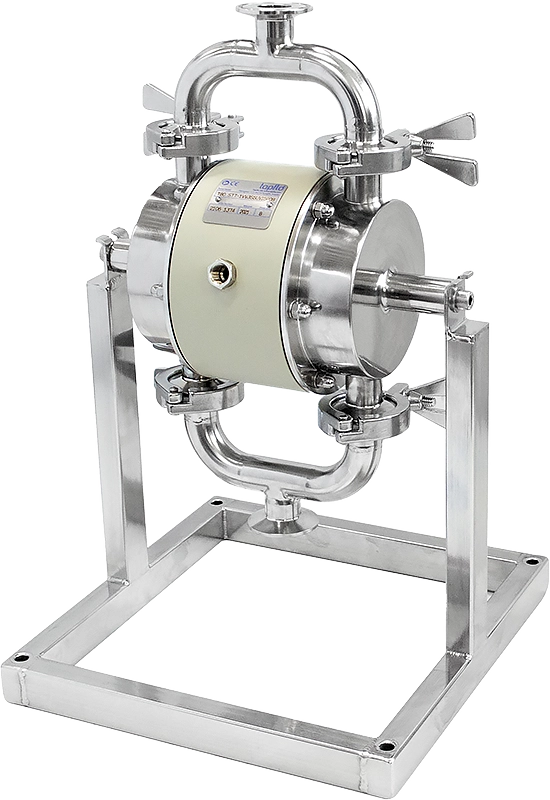 Sanitary diaphragm pumps Sanitary diaphragm pumps |
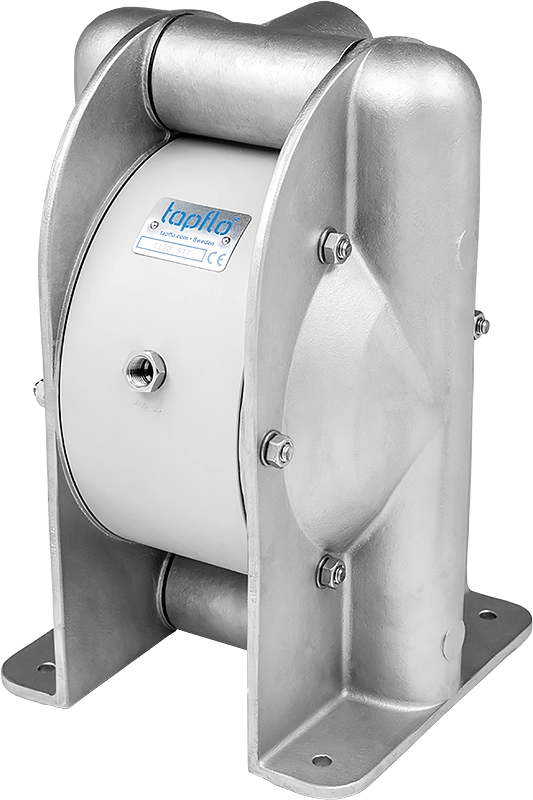 Metal diaphragm pumps Metal diaphragm pumps |
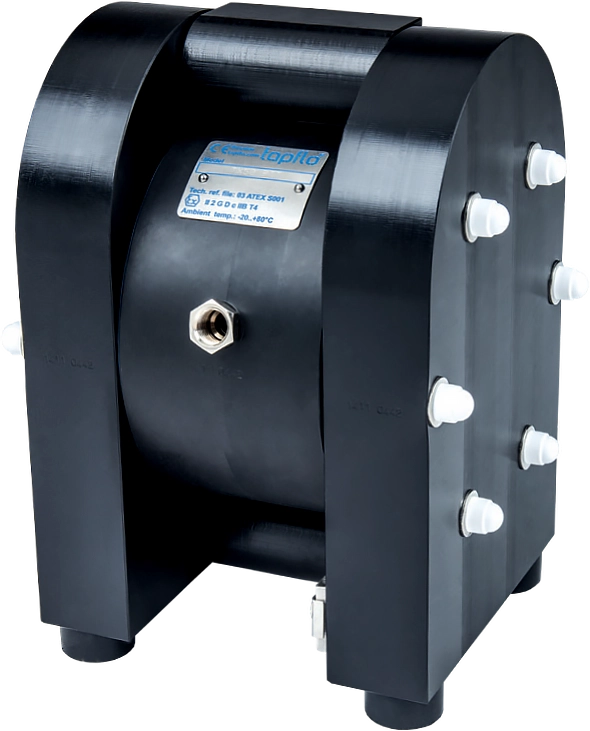 Plastic diaphragm pumps for ATEX zones Plastic diaphragm pumps for ATEX zones |
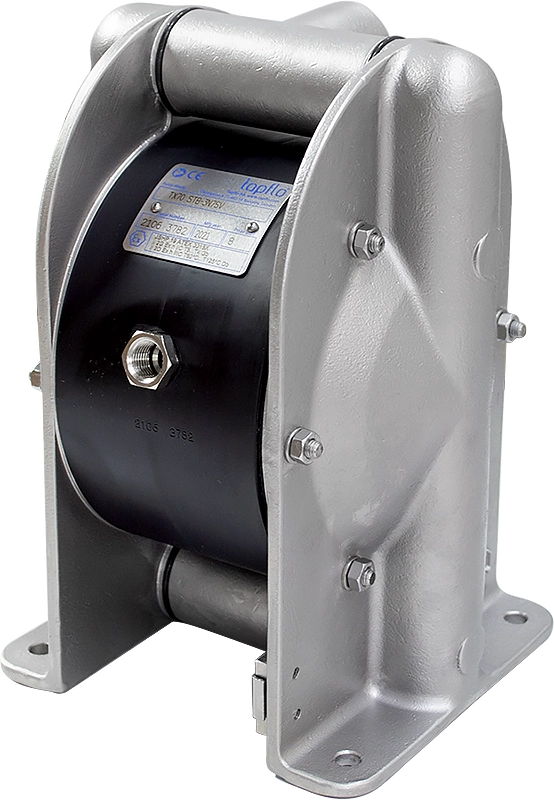 Metal diaphragm pumps for ATEX zones Metal diaphragm pumps for ATEX zones |
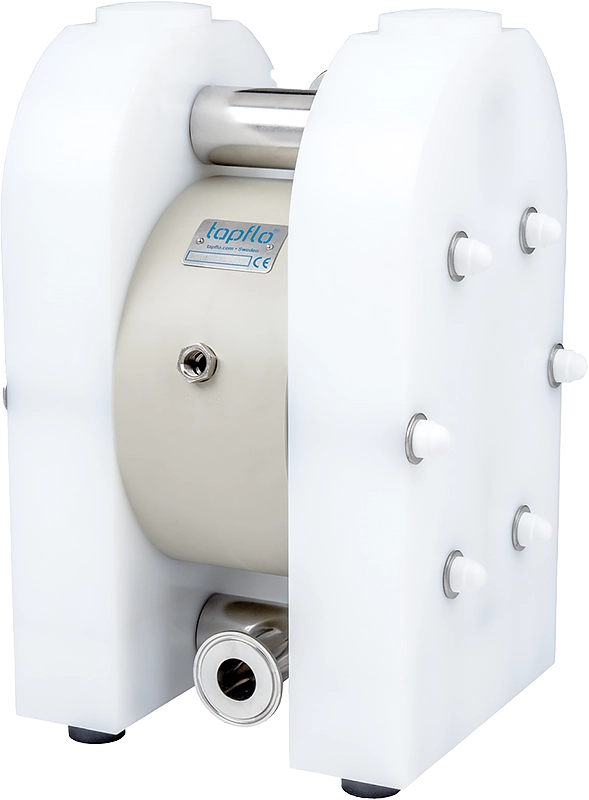 Pharmaceutical diaphragm pumps Pharmaceutical diaphragm pumps |
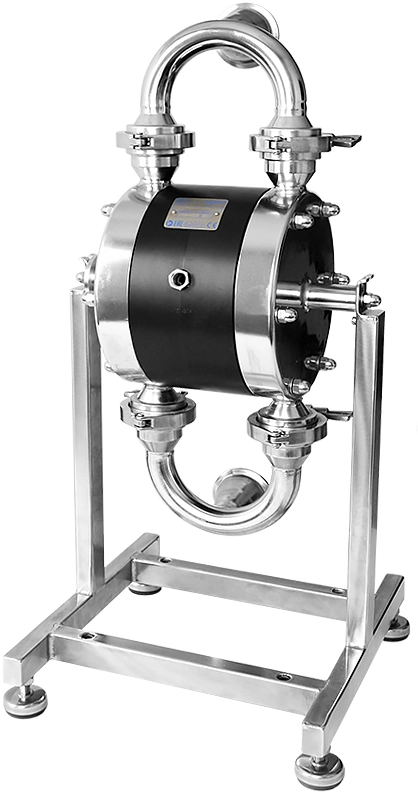 EHEDG Aseptic diaphragm pumps EHEDG Aseptic diaphragm pumps |
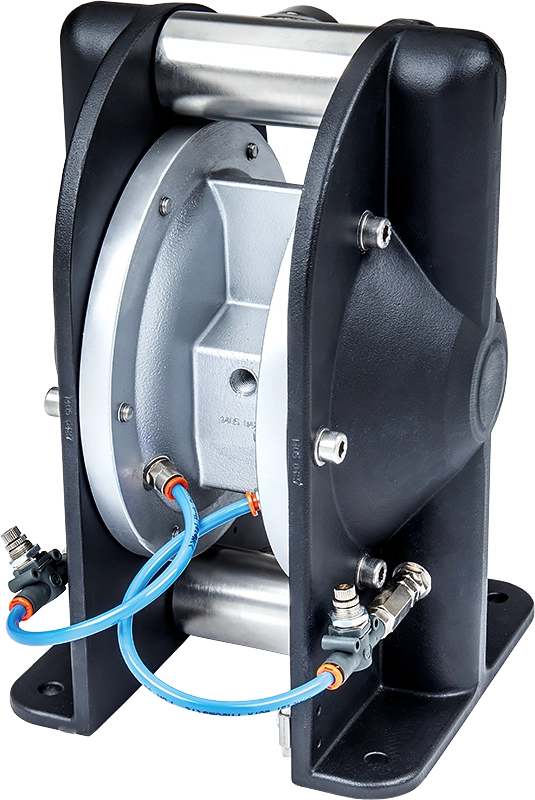 Powder diaphragm pumps Powder diaphragm pumps |
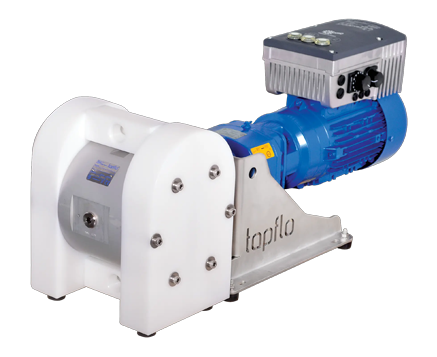 |
EODD (Electrically Operated Double Diaphragm) pumps – are driven by an electric motor connected to a drive system that moves the diaphragms. The pump’s performance can be precisely controlled. In pump models equipped with an inverter, we can regulate the motor speed. | ||
Both types can suck medium from almost 10 meters high (converted to water). They can also run dry, and in that case, the suction works up to about 5 meters high. Each version has its advantages and differs in cost. To learn more about this topic, we encourage you to read our comparison of EODD electric pumps with AODD air-operated pumps Electric diaphragm pumps.
Read more and find out what we offer: Pneumatic diaphragm pumps
How does an air-operated diaphragm pump work?
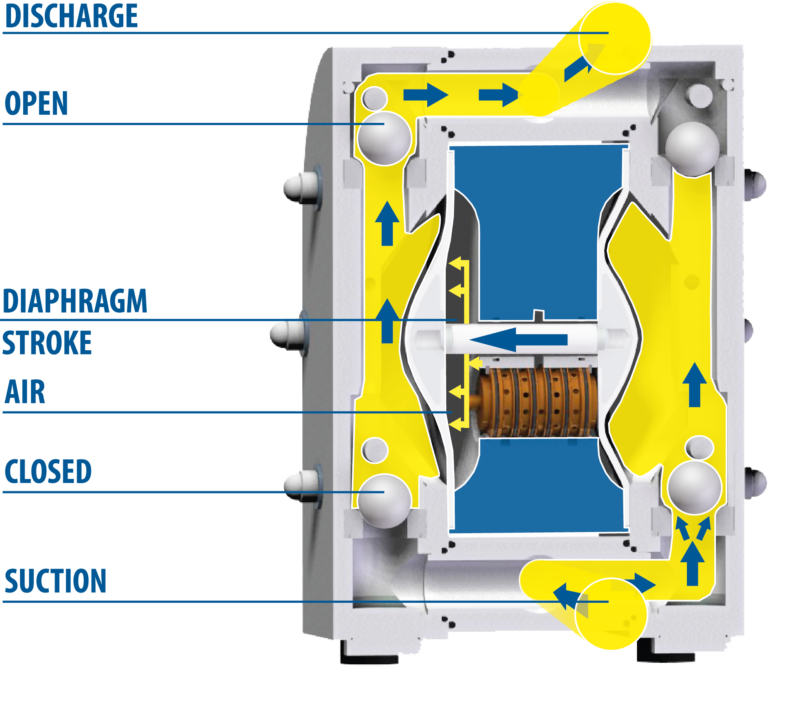
Diaphragm pump – cross-section diagram
The graphic shows a Tapflo diaphragm pump, which reflects the company’s “Simple is art” philosophy. This pump consists of up to 70% fewer parts than products offered by competitors.
Air-operated, it is a fully mechanical device that works by alternately supplying compressed air to two air chambers located behind the diaphragms, leading to changes in the volume of the pump’s working chambers. Such devices are also referred to as pneumatic diaphragm pumps. Alternating suction/discharge of the transferred medium is generated.
Diaphragm pumps – construction and principle of operation
|
Diaphragm Pump Operating Cycle
|
Valve System Ball Check Valves: A system of ball check valves prevents liquid backflow and controls the flow of liquid, allowing it to move in the correct direction:
|
Pressure Regulation
|
Diaphragms, air distribution valves, check valves
Diaphragm pumps, made of high-quality materials, will last for many, many years with proper operation. Designers ensure that diaphragms and air distribution valves are made of various materials to meet the requirements of specific applications and ensure optimal chemical resistance, mechanical strength, and long service life.
Diaphragms – an essential element of a diaphragm pump
Versatility, high chemical resistance, flexibility, and durability – these are the main features of diaphragms offered by Tapflo.
- Solid and efficient diaphragms: Diaphragms in pumps play a key role in their operation, separating the pneumatic from the hydraulic part and ensuring reliability and pumping efficiency.
Types and advantages of individual materials used in diaphragm production
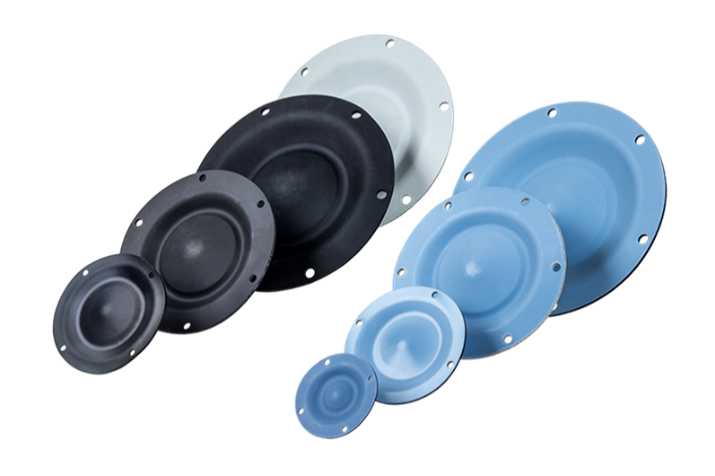
Material Advantages Application
It is worth choosing a pump with diaphragms characterized by a high level of safety and hygiene. In the food and pharmaceutical industries, it is also important that we can choose a diaphragm with an FDA certificate. This allows, among other things, safe contact with food. Elements made of EPDM, PTFE, or NBR White have an FDA certificate.
NBR (Nitrile Rubber)
Good resistance to oils, greases, fuels, relatively low price, good mechanical strength.
Applications: Oil industry, food industry, transport, machine production.
EPDM (Ethylene Propylene Diene Rubber)
Good chemical resistance to acids and bases, excellent resistance to ozone, atmospheric conditions, and aging. This material does not cope well with oils and greases.
Applications: Chemical industry, food industry, cosmetics industry, water and sewage industry.
FKM (VITON)
Antistatic, flame retardant, chemically resistant to, among others, sulfuric acid, hydrocarbon and automotive fuels, and ozone, performs well at high temperatures.
Applications: Chemical industry, metal processing industry – galvanizing plants, heavy chemicals.
PTFE (Polytetrafluoroethylene, Teflon)
Elements made of plastic are characterized by excellent chemical resistance to most aggressive chemicals, high operating temperature (maximum operating temperature limited due to the risk of vulcanization of the diaphragm), low coefficient of friction, good flexibility.
Applications: Ideal for pumping aggressive liquids (chemicals, acids, alkalis, solvents).
White EPDM
Can come into contact with food.
Applications: Food industry, dairy industry.
It is worth choosing a pump with diaphragms characterized by a high level of safety and hygiene. In the food and pharmaceutical industries, it is also important that we can choose a diaphragm with an FDA certificate. This allows, among other things, safe contact with food. Elements made of EPDM, PTFE, or NBR White have an FDA certificate.
Air distribution valves
These are the hearts of diaphragm pumps that distribute compressed air within the device. They are sometimes referred to as air valves. Their great advantage is that they do not require lubrication. The following materials are often used for the production of these components:
Material Advantages Application
| PET Chemical resistance, possibility of regeneration. Applications: Battery industry, chemical industry, galvanizing plants | Brass Self-lubricating, attractive price. | Stainless Steel 316L Lower weight, lower price Applications: High-pressure applications, chemical industry, semiconductor industry, laboratories. |
Ball check valves
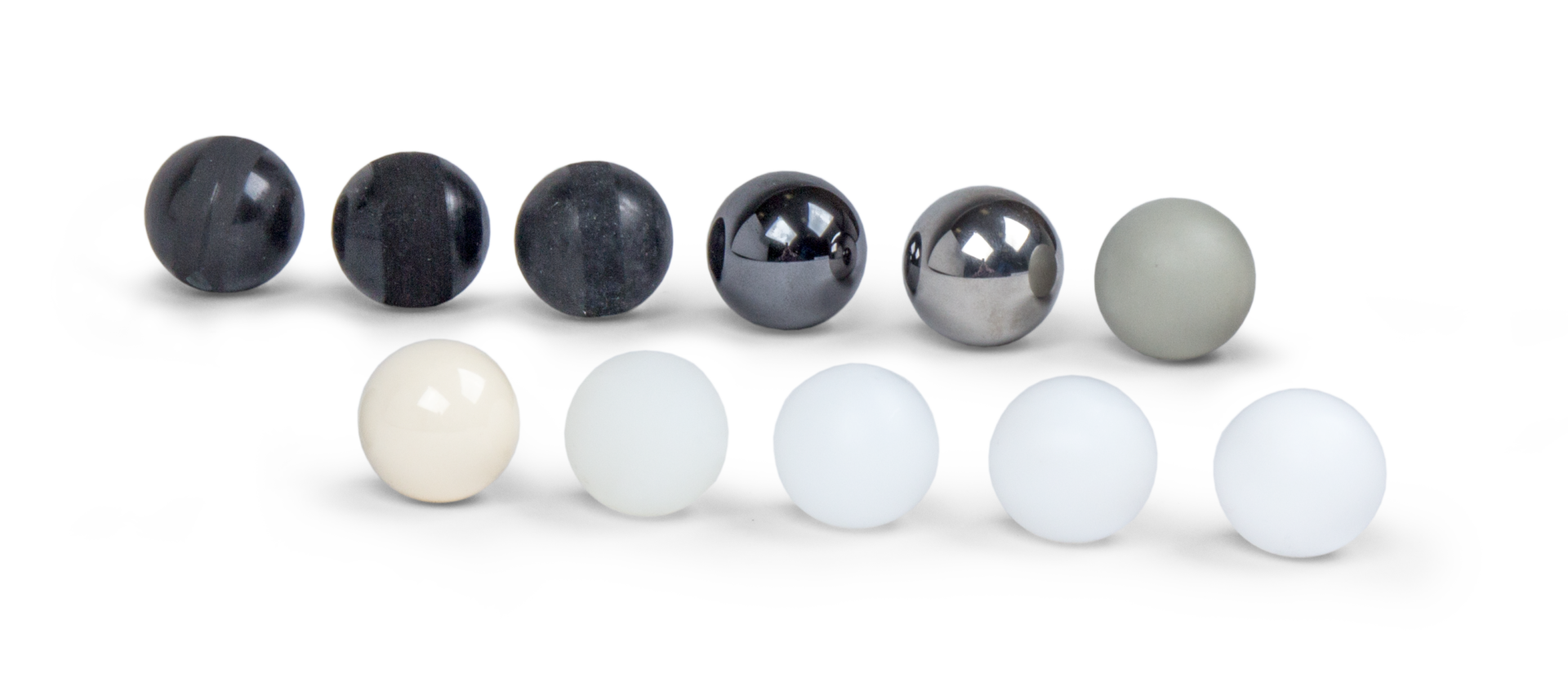
An important element of every diaphragm pump, which in terms of material execution should correspond to a specific application. For example, Tapflo offers as many as 13 material options. The material from which the ball is made must be resistant to the action of the pumped liquid. Therefore, for acidic, chemically aggressive liquids, it is worth choosing valves made of PTFE.
The diaphragm pump is an efficient and reliable solution for pumping various liquids. The AODD version uses a mechanical drive powered by compressed air and an advanced check valve system. To ensure effective and directional medium flow, it is also worth remembering to appropriately adjust the air pressure to the pressure losses in the installation and also take into account the liquid flow requirements that are necessary for a specific application. There are also diaphragm pumps driven by an electric motor (EODD) on the market, which is an interesting economic alternative for long-term operation.
Not sure which pump is right for you? Contact our experts!
See how a diaphragm pump is made
Diaphragm pumps – types of installation
Diaphragm pumps are versatile and easy to install and can be divided into several types depending on their mode of operation.
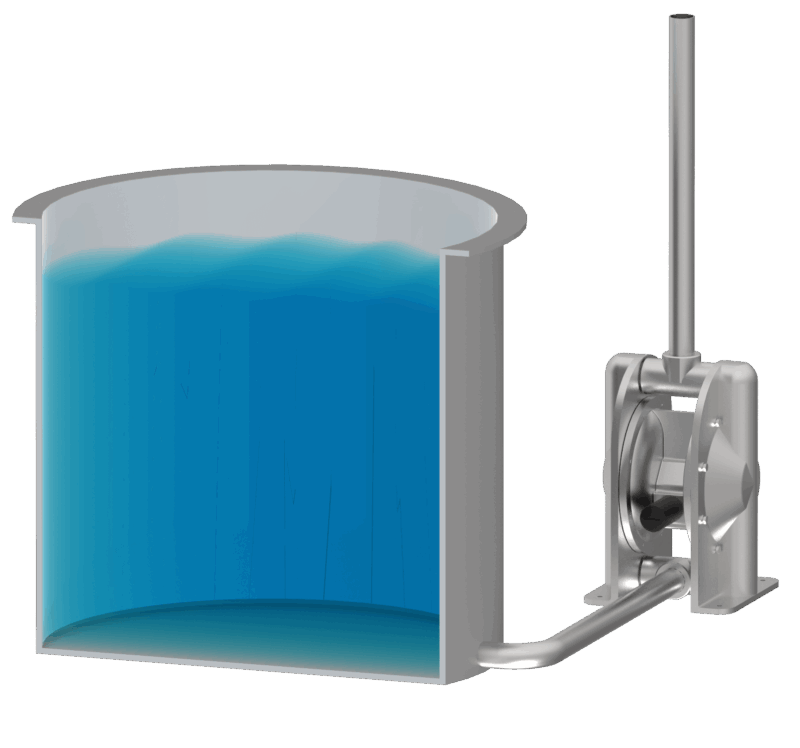 |
Diaphragm pumps operating under positive inlet pressure (flooded suction)Installation designed with positive pressure on the suction side. This is the best solution when it is necessary to completely empty the tank or when pumping high-viscosity media. When a diaphragm pump operates under positive inlet pressure (i.e., it is flooded with liquid), it can efficiently transfer various media such as: paints, varnishes, oils. |
 |
Self-priming diaphragm pumpsThe design of such a pump allows operation with high vacuum. The pump can start operation with negative pressure on the suction side without causing any damage to the device. Suction height reaches 5 meters from an empty pipeline and up to 8 meters from a wet pipeline. The ability to prime depends on the size of the diaphragm pump. Diaphragm pumps of this type are capable of generating negative pressure on the suction side, allowing them to draw media from a lower level or a greater distance. Thanks to this ability, a self-priming diaphragm pump can operate even when the suction line is initially empty, making it a very versatile tool in installations where there is no natural fluid inflow. |
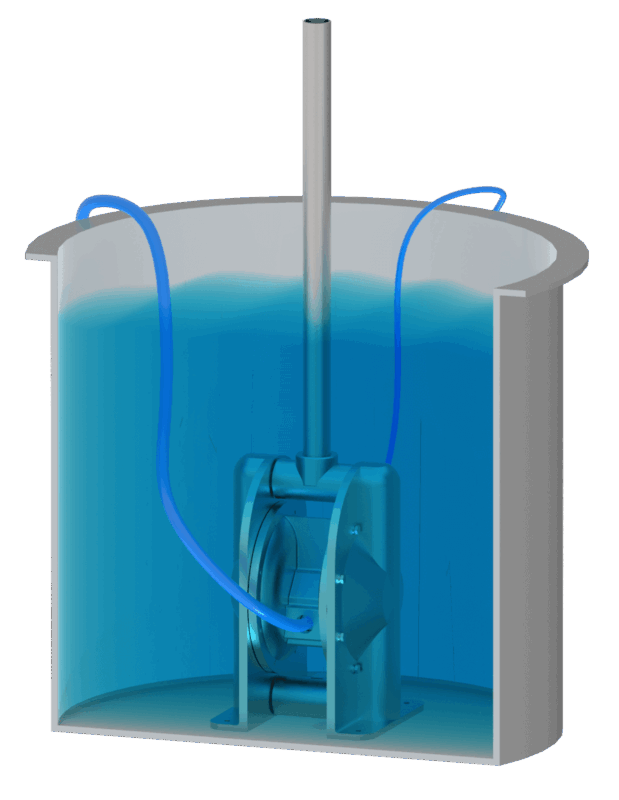 |
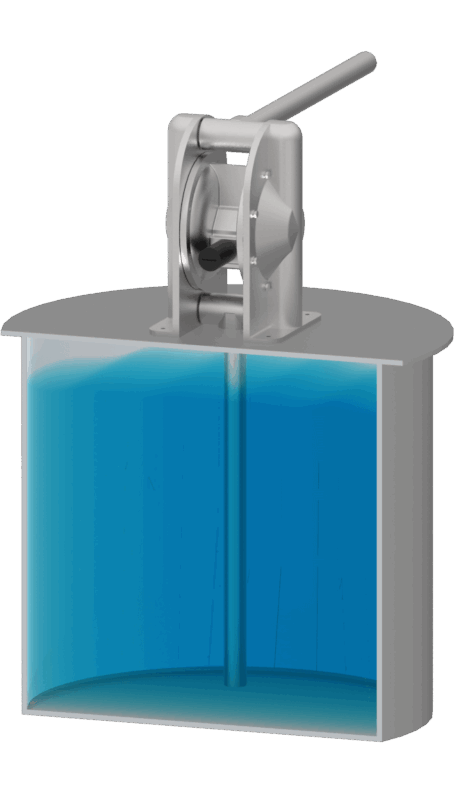
Submerged diaphragm pumpsDiaphragm pumps can be installed as submersible. It is important to check the chemical resistance of all elements that will come into contact with the medium. The condition for the pump’s operation is to discharge the air outlet from the pump above the liquid level using an appropriate hose. Submerged diaphragm pumps are characterized by their efficiency in installations requiring continuous operation in a submerged environment, where access to the pump may be limited. |
Diaphragm pump installation – key principles
Here we will present how to connect a diaphragm pump. Pump installation in each of the three cases is relatively simple, but it should be performed by trained personnel in accordance with the recommendations contained in the IOM manual. It is certainly worth equipping the installation with shut-off valves, which will facilitate pump disassembly during any servicing. Appropriate instrumentation for pump operation is also important. What equipment is recommended: a vacuum gauge on the suction and a pressure gauge on the discharge. Flow resistances in any installation increase over time, and appropriate instrumentation allows observation of the pump and installation operation. Another issue is the compressed air installation. It should be remembered that diaphragm pumps should be supplied with oil-free air of appropriate dryness and purity. The maximum air pressure is 8 bar. There are also special series of pumps where pressure up to 16 bar can be used.
Watch VIDEO
More videos are available on our YouTube channel. Join us!
How to properly operate diaphragm pumps?
Example: If the required pumping pressure is 3 bar, the discharge pressure should be 3.5 bar. Also, pay attention to ensuring that the pump has good conditions on the suction side. This may manifest as high flow resistance. This can be caused by a clogged suction basket or an uncleaned filter. Poor conditions on the suction side will cause the diaphragms to overstretch and eventually lead to their damage.2. Pump shutdown. The device can be stopped in two ways.
2.1. By closing the valve on the discharge – then the pump will stop automatically and the pressure on both sides of the diaphragm will be balanced.
2.2. By closing the compressed air supply. If the pump operates under positive inlet pressure, the suction valve must be closed so as not to overload the diaphragms with the hydrostatic pressure of the incoming liquid column. Care must be taken not to overload the pump with the pressure of the liquid flowing into the pump. Unbalanced pressure on the medium side will lead to diaphragm overstretching and ultimately to its damage.
Additionally, it should be remembered that when installing the pump and periodically every 5-10 days, the bolts in the pump should be tightened. Information regarding the service schedule should be included in the manual. This is especially important in plastic pumps. Plastics tend to creep (permanently change dimensions), so tightening the bolts is crucial in this case.
As the basic operating principle is based on air supply, it is necessary to ensure its appropriate quality during operation. Especially in the season when the relative humidity of the air is high, installations should be drained frequently. Water that enters the installation and reaches the pump first damages the slides in the air distribution valve and then settles on the exhaust muffler and freezes, resulting in increasingly slower pump operation until it stops. The air should also be separated from oil and solid particles.
Regular periodic inspections of the pump’s working elements, i.e., the air distribution valve, diaphragms, and check valves, are fundamental for proper operation. Reputable manufacturers recommend such an inspection at least once a year. When wear of individual parts of the device is diagnosed, they should be replaced. It is worth replacing valve seats every two years.
| PROBLEM | POSSIBLE FAULT | POSSIBLE SOLUTION |
| Pump does not work | Too low air pressure | Increase pressure via regulator |
| Air connection blocked | Check / clean air connection | |
| Muffler blocked | Check / clean / replace muffler | |
| Air distribution valve damaged | Clean / replace air distribution valve | |
| Contamination in the pump side chamber | Remove contamination from chambers | |
| Diaphragm rupture | Replace diaphragm | |
| Poor suction | Suction connection not sealed | Seal suction line |
| Suction connection blocked | Clean suction line | |
| Muffler blocked | Check / clean / replace muffler | |
| Blocked or damaged valve balls | Check dimensions and shape of valve balls | |
| Wear of valve seats Pump starts at high pressure Air in suction / discharge line Dry suction at discharge pressure |
Check dimensions and shape of valve seats Start pump at low speed (see section 2.2) Vent suction / discharge line Prime pump / start pump without discharge pressure |
|
| Uneven pump operation | Blocked valve balls | Check dimensions and shape of valve balls |
| Seal in center block Air distribution valve damaged |
Replace seals Clean / replace air distribution valve |
|
| Diaphragm rupture Valve ball damage Muffler icing |
Replace diaphragm Check dimensions and shape of valve seats Improve air quality (see sections 1.7.1 and 2.2.2) |
|
| Low flow/pressure | Drop in supply air pressure Pressure losses on the suction side Leakage in supply line / air distribution valve |
Increase pressure via regulator Check / change suction side installation Check / repair / replace air supply line / air distribution valve |
| Blocked suction port or air connection port | Check / clean air supply line / suction connection | |
| Muffler blocked | Check / clean / replace muffler | |
| Wear or damage to valve balls Valve seat damage |
Check dimensions and shape of valve balls Check dimensions and shape of valve seats |
|
| Air contained in pumped medium | Seal suction line; check / fill tank | |
| Diaphragm rupture Muffler icing |
Check / replace diaphragms Improve air quality (see sections 1.7.1 and 2.2.2) |
|
| Medium leaks from pump | Insufficient tightening of screws on pump sides Damaged O-rings on ports Diaphragm rupture Stress / tension on installation |
Check tightening torques of screws Replace O-rings Check / replace diaphragms Adjust installation, eliminate tensions, if using a pulsation dampener, provide it with a separate stand (see dampener operating manual). |
| Medium leaks from pump muffler |
Diaphragm rupture | Replace diaphragm |
Diaphragm pump – device selection in five steps
Five key elements for pump selection that we should pay attention to are:
1
Pump capacity
2
Pressure generated by the pump
3
Properties of the transported liquid
4
Speed of goods delivery
5
Individual customer approach from the manufacturer
We can distinguish five basic parameters for selecting a diaphragm pump: pump capacity, i.e., the volume of liquid pumped per unit time, and discharge head, i.e., the pressure generated by the pump that causes liquid flow in the pipeline. Knowing the above parameters, it is necessary to determine what liquid the pump will pump and its basic physico-chemical properties, i.e., viscosity (liquid consistency), temperature, and possible presence of solid particles in the transferred medium.
The saying “Time is money” is particularly reflected in industry. Customers looking for a suitable pump will certainly pay attention to the delivery time of the device. It is worth using the offer of manufacturers who can efficiently deliver the product we need and have fast-operating service and large warehouses of spare parts. This is also important in the event of an unexpected breakdown. The issue of maintenance costs also remains crucial. Pumps are available on the market that allow internal losses in the air distribution valve to be minimized.
Still wondering which diaphragm pumps are right for your business? It is worth seeking advice from experts and considering the option of creating an installation with a pump in a “tailor-made” model, also with non-standard functionalities. By asking about detailed requirements, it may turn out that representatives of the company producing and distributing diaphragm pumps will advise selecting a completely different pump than the client initially assumed.
Diaphragm pumps – advantages
Diaphragm pumps are the most universal devices among all industrial pumps available on the market. They are used in many industries for pumping all types of liquids. In the chemical industry, they are used for pumping acids, solvents, paints, emulsions, and other chemically aggressive fluids. Diaphragm pumps are also excellent in the food industry for pumping very viscous and thick liquids and liquids containing solids. They have a user-friendly design, which helps to better understand the principles of proper operation.
Diaphragm pumps are manufactured from both metals and plastics. This brings a number of benefits. The basic metal materials used for pump production are aluminum, Teflon-coated aluminum, cast iron, and AISI 316L stainless steel. Pumps made of aluminum and cast iron are used for transporting liquids with a neutral pH, both thick and thin, and containing solid particles. Typical applications include pumping solvents, paints, and industrial oils.
Castings of diaphragm pumps made of AISI 316L acid-resistant steel are characterized by mechanical strength combined with chemical resistance. The pump’s center block, which is not in contact with the medium, is standardly made of corrosion-resistant polypropylene (PP). The most common liquids pumped by these pumps are nitric acid and caustic soda.
A version of the diaphragm pump made of electropolished AISI 316L acid-resistant steel, which meets hygienic requirements, is also available. Sanitary diaphragm pumps are most often used in the food, brewing, dairy, and cosmetic industries.
Plastic diaphragm pumps are made of polyethylene and . Polyethylene pumps (PE HD) are characterized by high abrasion resistance, 6-7 times better than polypropylene (PP). This allows such pumps to be used for pumping, for example, sludges with strong abrasive properties.
PE is resistant to most aggressive chemicals, such as concentrated acids and alkalis. The maximum operating temperature is 70°C.
The diaphragms move with a reciprocating motion and allow precise dosing of liquids without the risk of contamination.
Compact and durable design
Solid and durable construction
Safety of use (short service times)
Lubrication-free air distribution valve (pneumatic motor)
Wide range of pump sizes and versions
Option for special designs
Excellent technical parameters and easy operation
What are the benefits of using diaphragm pumps?
Easy to install and operate .
|
Universal. They pump various liquids of low and high viscosity.Practically any type of fluid can be pumped, from clean water, through low-boiling liquids, to thick substances and corrosive chemicals. Valves are capable of operating with liquids contaminated with solids, without affecting the pump’s suction capability. Low flow rate and smooth pump operation facilitate the transport of abrasive and erosive media as well. |
Safe.Tapflo diaphragm pumps are characterized by a high level of safety. Thanks to their pneumatic drive, they are completely intrinsically safe, making them ideal for use in explosive atmospheres. Additionally, to prevent static discharge, pumps can be equipped with conductive casings made of metal or graphite-reinforced PVDF. Thanks to these features, Tapflo diaphragm pumps ensure safe and reliable operation in demanding conditions. Versions available in ATEX explosion-proof design. |
The pump can operate without damage with the valve closed or the discharge pipeline blockedConstant flow rate adjustment is achieved by opening or closing the flow control valve or by increasing or decreasing the amount of air supplied. |
Modular design of the diaphragm pumpTapflo pumps often have a modular design, allowing for easy parts replacement and pump adaptation to specific application requirements. Modules can be quickly assembled and disassembled, simplifying both installation and maintenance. |
Instructions and technical supportTapflo provides detailed installation and operation instructions and offers technical support, which further facilitates proper installation and use of pumps. |
Dry self-priming up to 5 mThe diaphragm pump can create a vacuum in the suction line. The pump can self-prime clean water from a depth of up to 5 meters during “dry” startup. The ability to run dry allows pumps to be used in systems where fluid is delivered irregularly. When the fluid supply is interrupted, the pump can continue to operate without risk of damage from overheating or friction until fluid flows again. Thanks to their self-priming and dry-running capabilities, Tapflo diaphragm pumps can be installed in places where other pump types require additional equipment, such as check valves or priming before start-up. |
Low failure rateThanks to high-quality materials and robust construction, Tapflo pumps are characterized by a low failure rate. This translates into fewer interruptions in operation and simpler technical maintenance. Easy maintenanceSimple construction and availability of spare parts make pump maintenance easy and fast. Many models allow easy access to key components without the need to dismantle the entire pump. |
Not sure which pump is right for you? Contact our experts!
Diaphragm pumps – challenges and problems
The main inconveniences of diaphragm pumps can be summarized in a few points. These include:
Limited capacity – other types of pumps, e.g., centrifugal pumps, can deliver higher flow rates to the customer.
Pulsation – a phenomenon characteristic of this type of pump. They can generate significant noise, and the flow itself is not uniform. The solution is to purchase an appropriate dampener.
Diaphragm wear – diaphragms, due to contact with the liquid, are exposed to all undesirable effects of chemicals or high temperatures if the application requires it. It is worth monitoring their condition.
Limited pressure – diaphragm pumps have limitations regarding the maximum pressure they can generate.
Accessories for diaphragm pumps
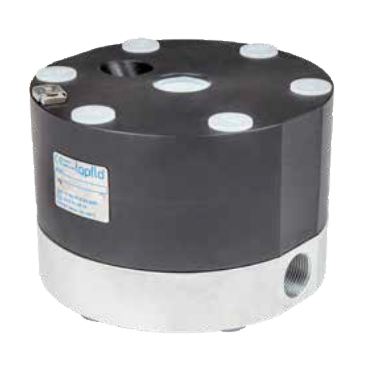 |
DampenersThis is the answer to the problem of pulsation, which often occurs with diaphragm pumps. The dampener not only eliminates annoying noise and vibrations but also protects against cavitation (the generation of shock waves due to the fact that the fluid pressure drops below the vapor pressure of the liquid). There are active pulsation dampeners that react responsively to the operation of the entire installation. Reputable manufacturers also supply devices that are integrated with the pump casing. This frees the user from the need to connect a dampener. Read more: Dampeners |
Medium level control system for diaphragm pumpsThe medium level control system is based on pneumatic components. It can contribute, among other things, to reducing operating costs. Thanks to precise medium level management, energy and consumable material consumption can be reduced. The instrumentation protects against unplanned downtime. The kit can be installed on tanks, sumps, or pipes to start and stop the pump at a specified medium level. Due to the lack of electrical components, the system can be used in explosion hazard zones. |
|
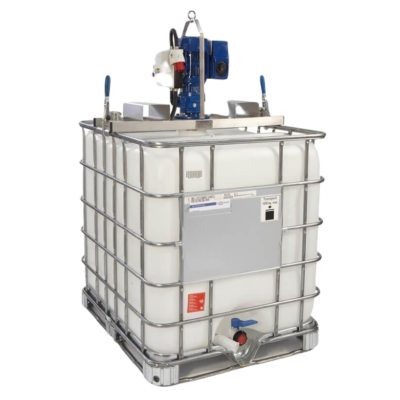 |
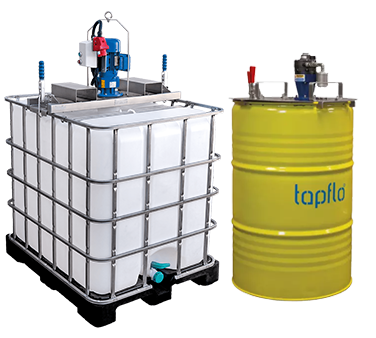
MixersTapflo offers a wide range of high-quality and durable mixers. They are perfect for mixing liquids in IBC containers and drums. Professional mixers have a safety switch. It is worth checking the motorering support offer and adapting the control system to your application. Read more: Mixers |
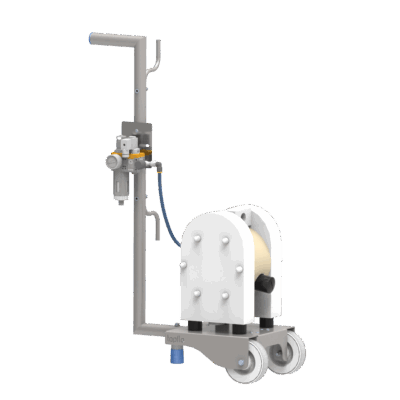 |
TrolleysProvide mobility for the pump unit. Allows the user to better manage production processes if many of its key stages are located far apart. Units with personalized control systems or designed for ATEX zones can also be purchased. Read more: Trolleys |
What determines the price of diaphragm pumps?
Pump type and model
Different models of Tapflo diaphragm pumps have different features and purposes, which affects their price. The choice between a standard model and a version with additional functions can change the cost.
Pump size
The cost increases with pump size, as larger pumps have a more advanced design and can handle higher flow rates and pressures.
Material of construction
Pumps made of materials resistant to aggressive chemicals, high temperatures, or high pressures, such as stainless steel, PVDF, or other specialized materials, may be more expensive.
Operating pressure and flow
Pumps designed to operate at higher pressures or with larger flows typically cost more due to their more advanced design and durability.
Additional functions and accessories
The cost of the pump may increase if it is equipped with additional functions, such as automation, monitoring systems, special valves, or other accessories.
Special execution
Pumps customized to specific customer requirements or made to order may be more expensive due to additional design and production work.
Certificates and standards
Pumps that meet specific industrial, health, or safety standards (e.g., ATEX certificates for explosion-hazardous areas) may have a higher price due to certification and testing costs.
Transport and installation costs
The price of the pump may also include transport costs and any costs associated with installation and personnel training.
Energy efficiency
Pumps with better energy efficiency may be more expensive, but they offer potential long-term savings, which can affect the total cost of ownership.
Diaphragm pumps – Tapflo vs. other manufacturers
Tapflo has over forty years of experience in pump manufacturing and is a leading European manufacturer of diaphragm pumps. The plant uses the latest machinery and conducts detailed quality control of all materials. Tapflo is highly competitive when it comes to product delivery speed, with warehouses stocked with thousands of pumps ready for shipment. In most cases, customers receive their orders within three working days.
For urgent needs, Tapflo is equally prepared: the company maintains over 250,000 spare parts for diaphragm pumps, which can be shipped to customers instantly, ensuring continuous operation and minimal downtime.
Tapflo pumps stand out on the market with a number of advantages:
Production in Europe – full control over quality
The largest number of options and special designs on the market
Fast, mobile, and experienced service
Trouble-free dry running – no seals or bearings requiring lubrication
Easy to install and operate – small number of working elements
No special tools needed for pump service
Smooth flow regulation through a compressed air preparation unit with a needle valve
Universal – pump various liquids of low and high viscosity
Huge number of certificates. Versions available in ATEX explosion-proof design
Suction and discharge ports can rotate to any angle within 180°. This does not apply to sanitary and aseptic pumps
Made of high-quality materials
Tapflo diaphragm pumps are manufactured from both metals and plastics
The strength of simple and quality design and versatile application
The main parts of the pump (side and connecting plates) are made with machining technology, not injection molding. This allows the use of materials such as PE and PTFE instead of PP and PVDF. This means that Tapflo products give the customer better mechanical strength and better abrasion resistance.
What about diaphragm life? The diaphragms used by Tapflo have a composite structure with a metal core, which significantly increases their lifespan compared to classic designs with a through-hole. Moreover, they are easier to keep clean.
The air distribution valve from the Swedish brand also has many advantages. First, it does not require lubrication. Therefore, servicing the device is clean and ecological. Also important is the fact that the distributor is placed inside the pump, which ensures lower air consumption. It is not an integral part of the center block and consists of only two moving parts. This significantly affects the speed and efficiency of service.
Tapflo designers also opted for no threads in the plastic parts on the discharge side. The devices are also equipped with rotary connectors, which greatly facilitate pump installation in the system.
A significant benefit for the customer is also the fact that the stoppers in the pump are always a separate part. In contrast, competitors often integrate them with the side/connector, which, in case of wear, necessitates replacing a large and expensive part.
Tapflo uses different grades of PE depending on the part. Valve seats and ball valve stoppers, which are most susceptible to wear, are made of UHMW PE1000 for best mechanical strength and abrasion resistance. Side and connecting plates, on the other hand, are made of PE500, bushings PE300. As for pumps with ATEX certification, they are entirely made of PE 1000. PTFE pumps (pure polytetrafluoroethylene) are thermoplastic polymers with high chemical resistance. Pumps made of this material can transport even the most corrosive substances, e.g., concentrated nitric acid. Maximum operating temperature up to 110°C. Quality control and the assembly station are some of the most important links in the Tczew factory. Checking the workmanship and fit of components is a priority.